

This week, I am excited to bring you another guest post; this one is by writer and podcaster Carrie Jo Bradley. It is another installment of the series, Let Art Change Your Mind, where I invite you, my readers, to share how a work of art has shifted your perspective on a creative (or life) challenge. Check out this post for an overview of the self-coaching exercise, and reach out via email at hello@artistsforjoy.org if you’re interested in writing a guest post in this series.
Carrie so generously plugs the Creative Leap Mastermind at the end of her essay, and as I type this, there are only four spots left. If you are on the fence about joining us, consider this the sign you’ve been waiting for: take the leap! :)
And don’t worry; later this week, our Advent Art series returns!
Enjoy Carrie’s inspiring words,
—Merideth
Facing the ledge
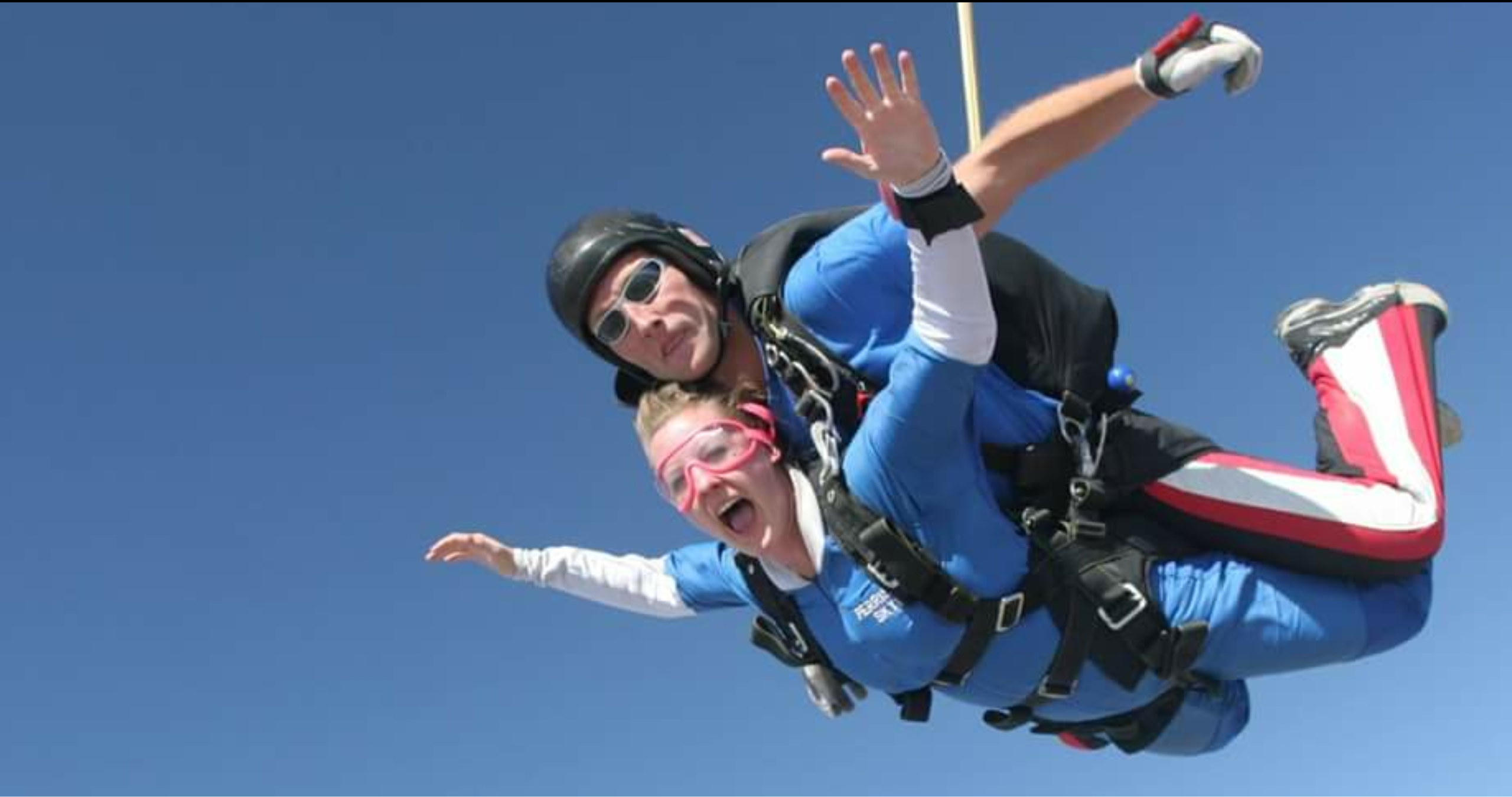
It’s the moment of no return. I’m standing on the ledge of an open door in the turbine-powered jump plane, my stomach churning with a dizzying cocktail of excitement and fear. I can hardly believe I agreed to this. Intentionally jumping out of an airplane from 14,000 feet up in the sky? What kind of sane person pays to do this?
Maybe peer pressure influenced me. My best friend wanted to go skydiving to celebrate her graduation. Perhaps it appealed to my sense of adventure. It could be that being in my twenties gave me a sense of invincibility, though after the extensive safety briefing, I was well aware of the dangers.
I’m strapped to my handsome tandem instructor, a veteran of thousands of jumps who exudes a nonchalant yet upbeat attitude like he could do this all day every day. His confidence reassures me slightly. Looking down at the wide expanse stretched out below, a deafening flow of air blowing back my hair and skin, I start to have second thoughts. Can I really do this? Was this a mistake? What if the parachute fails and I fall to my death?
Have you ever stood at the edge of something big and felt frozen? Whether it’s a bold new venture or a blank page, that initial leap can feel impossible. Sometimes we need a gentle nudge.
The instructor’s voice cuts through the roar of the wind, calm and steady: “Take a deep breath.” I obey, filling my lungs with air, though it feels like my chest might explode from the pressure of it all. “On three,” he says, his hands firmly guiding me further toward the edge. My mind races with every possible worst-case scenario.
Somewhere beneath the chaos of my thoughts, a still, small voice inside lets me know I will be okay. And before I can argue, we leap into the void. For the first few seconds, my brain can’t process what is happening. The air roars past my ears, and my body feels weightless, suspended in a wild, chaotic tumble. I feel like a leaf caught in a gale, completely out of control—and yet, exhilarated. My arms flail, my mouth stretches wide open in awe, and my voice squeals with excitement mixed with terror.
Perhaps you know that feeling of relief: what once seemed impossible and scary turned out better than you thought. Looking back, you realize it was actually fun!
After what feels like a lifetime and an instant of freefalling at 120 miles per hour, the instructor deploys the parachute. The sudden jolt brings us from a rush of freefall to a serene, almost surreal glide. The silence is profound after the roar of the wind. I try to take it all in as we float toward the ground. I gaze at the landscape below. Trees, fields, buildings, cars, and roads grow larger with each passing second. Up in the air, looking down, people look like little specks.
Every time I fly—even in a big commercial jet airline—I love the perspective shift it brings. My challenges don’t disappear, but their edges soften. From this vantage point, I realize that the world is so much bigger than my momentary concerns. There’s something deeply freeing about that—a sense that it’s okay not to have all the answers, that it’s okay to let go. The view from above has a way of grounding me, not by pulling me down but by lifting my eyes to see how much more there is beyond the bubble of my day-to-day worries.
We land more smoothly than I expected. My feet touch the ground, and I notice my heart pounding, my cheeks aching from smiling, and my legs feel a bit gelatinous. My whole body is abuzz with relief and exhilaration.
Shifting perspectives
More than twenty years later as I look back on my skydiving experience, I see it as a metaphor for the writing process. Staring at a blank page can feel like standing on the edge of an open airplane door, getting ready to jump.
Skydiving is more than just an adrenaline rush; it’s a lesson in letting go. For those few minutes, I surrendered control completely, trusting the equipment, the instructor, and even the laws of physics to bring me safely back to earth. It was both terrifying and liberating, a tangible reminder that sometimes the greatest rewards come from embracing the unknown. And sometimes, a shift in perspective can be just what we need.
As a recovering perfectionist and an aspiring author, writing my memoir strikes fear in me similar to the terror of skydiving. Overwhelming resistance blows against me as I prepare to plunge into the uncertainty of an unwritten story. Focusing on the worst that can happen stalls the start.
What if people read this and think I’m not a good writer? What if no one reads this or appreciates it? What if I spend my precious time on this and it turns out to be a waste?
I’ve been trying to write a book for years. I’ve paid for multiple classes, read dozens of books, joined groups, and shared accountability. I have not made much progress. It feels like no progress. I suppose you could say I’ve been stuck. That’s probably why the title of Merideth’s book captured my interest.
When I bought The Artists Joy: A Guide to Getting Unstuck, Embracing Imperfection, and Loving Your Creative Life, I felt hopeful, as the title speaks to some of my deepest desires. I want writing to feel joyful and fulfilling, and I don’t want perfectionism to hold me back any longer. Finally, I found a resource that helped me quiet the inner critic that so often stops me from jumping into writing.
Changing Lenses
Merideth introduces a way to try on new lenses for seeing things differently to overcome creative block. Here’s how it works, which she lays out in chapter 10 of her book:1
The first task is to write the facts about a creative challenge you’re having. Then, write the descriptive words that come up when thinking about this challenge. The word for my current lens: daunting. Book writing often feels like hard work and drudgery.
Finally, the exercise invites participants to find works of visual art and describe the lens that each of those evokes. I confess that I’m not a connoisseur of visual art. I don’t consider myself an artist, so I felt slightly skeptical that this exercise would make much difference for me. Just like I trusted the parachute to carry me, I needed to trust this process to guide me past my writing fears.
I Googled famous paintings, waiting to see which images jumped off the screen to me. The first one that appealed was the famous Michelangelo painting, “The Creation of Adam.” The image is of God, depicted as an elderly white-bearded man flanked by attending angels, reaching an outstretched finger toward Adam, who is mirroring this pose. The word that came to mind was “powerful.”
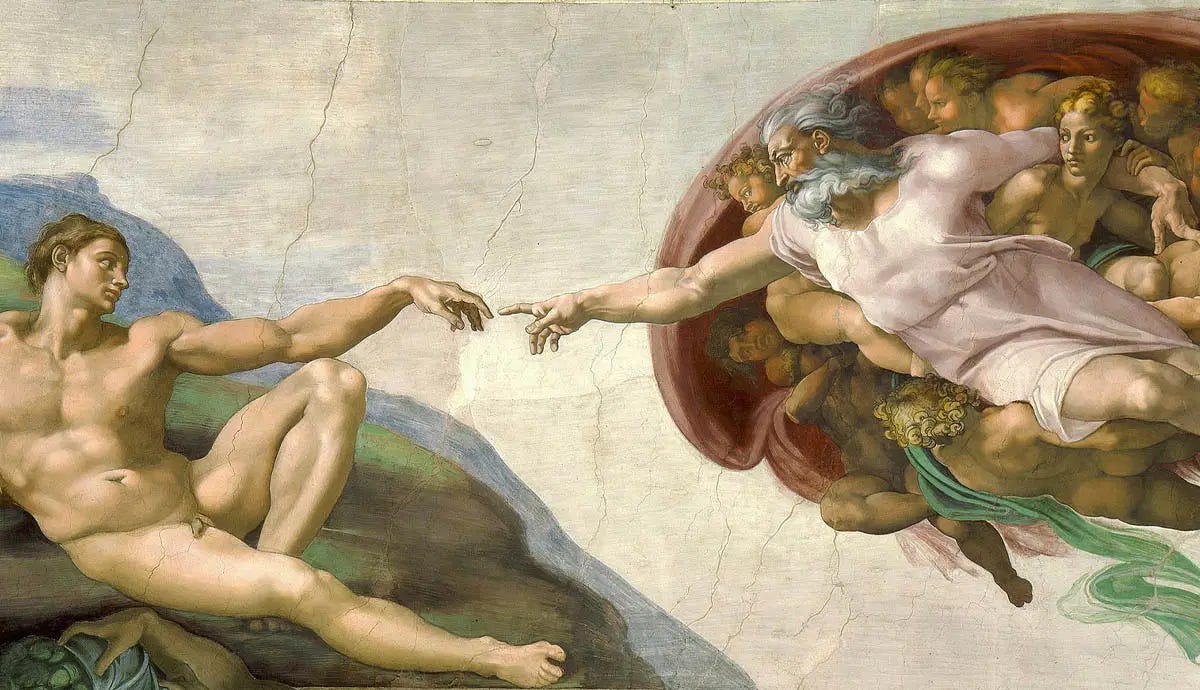
What strikes me about this painting is the idea it conveys: that something as intricate and extraordinary as humanity could be created from nothing. It speaks to the omnipotence of a Creator capable of forming the heavens, the earth, and human life itself. Creation, in any form, feels like an act of channeling a force greater than ourselves—a force that turns the intangible into the tangible and the invisible into the visible.
Reflecting on this, I began to wonder: What if I could harness that same power of creation in my own work? When I believe my creative efforts—even the ones that feel small or imperfect—hold value, it shifts my perspective. My work matters because I matter. If I dismiss my creations as unworthy, lifeless, or insignificant, I lose the motivation to keep going. When I view my writing as a reflection of something meaningful, I feel energized to continue.
The God of the Bible, after creating humans in His image, looked at His work and declared, “It is good.” Do I look at my creations that way? Rarely. Instead, my inner critic often takes over. When I stare at what I’ve written, I hear imaginary voices saying, “That could be phrased better,” or “This isn’t as good as what someone else has written.”
But if I truly believe I am created in God’s image, then I am a piece of the Master—a masterpiece. Yet, I also recognize that, unlike God, my creations aren’t perfect upon completion. They may need refinement or fall short of certain standards, but that doesn’t make them—or me—less worthy. It’s possible to be both a masterpiece and a work in progress at the same time.
So, I create. I iterate. I revise and recreate. The “power” lens reminds me to lean into the creative process, to trust that starting is an act of courage, and to take the leap even when I’m unsure of the outcome.
How about you? Is there a creative leap you’re hesitant to take? What would happen if you saw yourself and your creative work as powerful? Could you embrace the process and let go of the need for an instantly perfect product?
Embracing Mystery
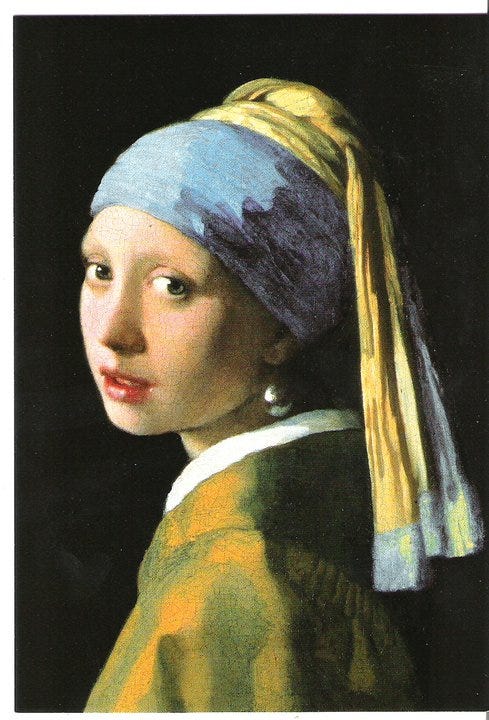
The second painting that captured my attention was “Girl with a Pearl Earring” by Johannes Vermeer. This painting speaks mystery to me.
Looking at the book writing process as mysterious makes a lot of sense. What works for one writer doesn’t necessarily work for another. Some may claim they have “the secret formula,” but there can be no one set process that works for everyone.
According to writer Joseph Epstein, 81 percent of Americans want to write a book but most of them never will. If there were a formula that worked for everyone, we’d have a lot more books in the world.
I’ve written in my journal every day for years, stocking up more journals than will fit on my bookshelf. So why haven’t I been able to make any significant progress on writing a book? That pesky problem of perfectionism certainly has something to do with it. I can write; I just have to figure out a way to get out of my own way. I’ve made progress on projects before, overcoming perfectionism to create a podcast, for example. But writing the book somehow feels so much scarier. The heights feel higher, the stakes feel greater.
One writing coach suggested I simply determine the number of words that need to be written per day and put them on the page. Ha! Easier said than done. That advice feels like jumping from an airplane without a parachute.
Rather than forcing words onto the page, I would much rather experience playfulness and curiosity than the drudgery and forcefulness I’ve felt in the past. Treating the process as a mystery and my brain as a puzzle makes it much more fun and exciting than pushing myself to produce.
The girl with the pearl earring is open, curious, receptive. She wonders. She invites questions and considers possibilities. Her gaze reminds me to embrace curiosity in my writing, to let the process guide me rather than forcing a specific outcome. What if I could be like that? What if the ways that work for others don’t necessarily work for me?
The only way to know is to try. And so I decided to treat my writing as an experiment. So far I’ve tried writing by hand in a notebook instead of at the computer. I’ve tried dictating my words out loud rather than typing them. I’m experimenting with frequency and duration. Is it more helpful for me to write a little bit every day, or to write for a longer chunk of time every few days? Do I write best at home or in a coffee shop?
I’m still learning what works best for me, but I can already tell that viewing my work as a mystery keeps me from judging it and feeling shame when I don’t do all the things I think a real writer “should” do. Looking at the book writing process through different lenses makes it feel more approachable and doable, much like having someone to help me make the leap from the airplane.
Guided Leaps
I wouldn’t have wanted to jump from that plane solo. The tandem instructor served as my guide in skydiving, calming my fears and helping me focus on the thrill instead of the risk. I’ve realized that I need the same kind of guidance in my writing—a steady, reassuring presence to keep me grounded when doubts swirl.
Just as I needed my tandem instructor to guide me through the jump, I’ve realized that creative leaps are easier with support. That’s why I’m joining Merideth’s Creative Leap Mastermind, a program designed to help people like me move forward with joy and accountability.
Writing, like skydiving, isn’t something you ever truly master in a single attempt. Each jump and writing session requires its own kind of bravery. Each time, you face the ledge of the unknown, unsure if you’ll land the way you hope. But here’s the secret: the process itself holds the joy. It’s not just about the perfect landing or the completed manuscript. It’s about the exhilaration of trying, of putting yourself out there, of giving your creativity a chance to soar.
Looking back at both the skydive and my writing journey, I see how perspective has been an ally. What once felt impossible—the leap into thin air or the courage to confront a blank page—becomes manageable when I remember to step back and reframe it. The stakes may feel high, but in the grand scheme of things, the act of creating is what truly matters.
And so, whether in skydiving or writing—or any other leap we’re called to take—there’s a lesson to be learned: the moment of no return isn’t something to fear. It’s an invitation to trust, to leap, and to discover just how capable you are when you’re willing to let go.
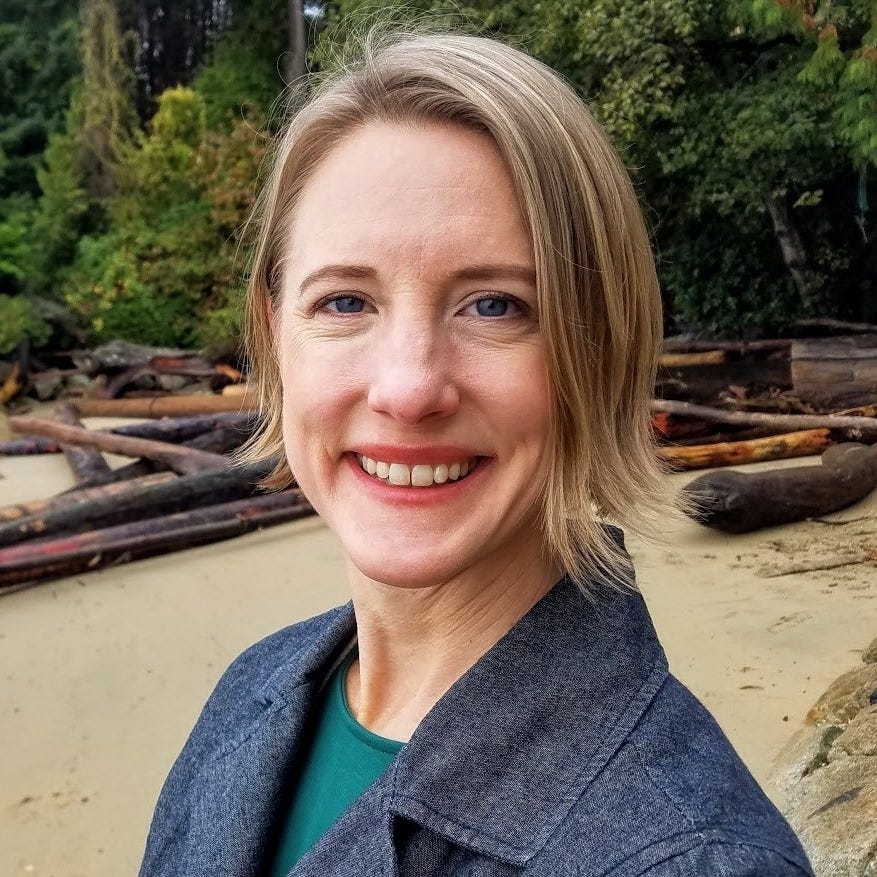
—Carrie Jo Bradley is a writer and host of the Plucky Not Perfect Podcast.
What a powerful essay! Beautifully written. Thank you, Carrie and Merideth!