

Hi friends, welcome to our first official post under the new name: Art’s Open Door. The new scope and focus of this weekly-ish creative offering is to remember and celebrate that art offers us a unique pathway to self-discovery—to personal development— but also connection with the divine.
As I said last week, “Art is an open door, a thin place, a whisper, a still small voice, or an all-consuming avalanche of grace— it leaves us different from how it found us.” (Read about why I changed the name here.)
If you enjoy the message of today’s post, I’d love to hear from you. The comments are open to everyone on this one. Do you know someone who would love Art’s Open Door? Here’s a nudge to share this one with them by forwarding the email you received or clicking the button below.
I’m so glad you’re here.
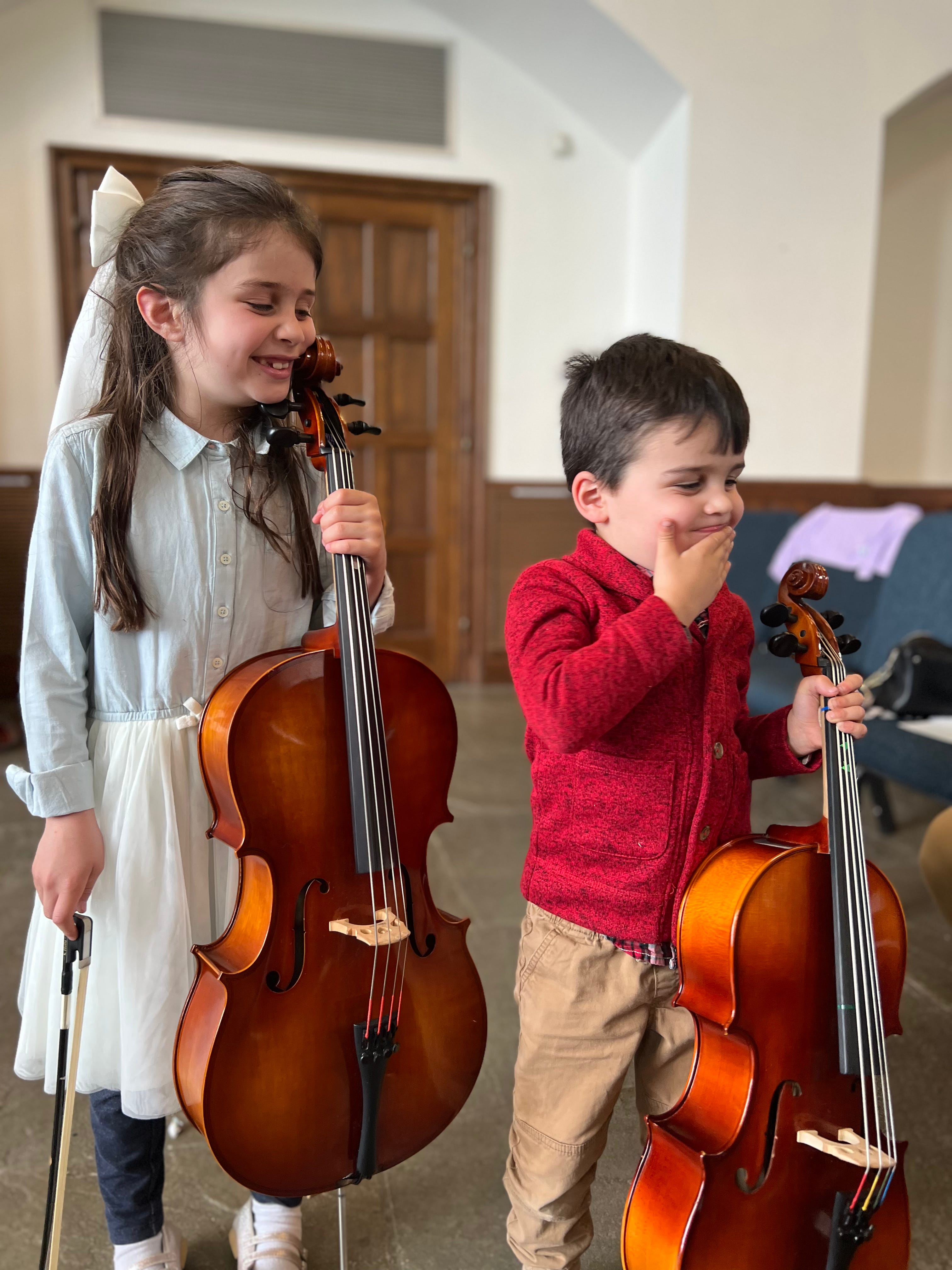
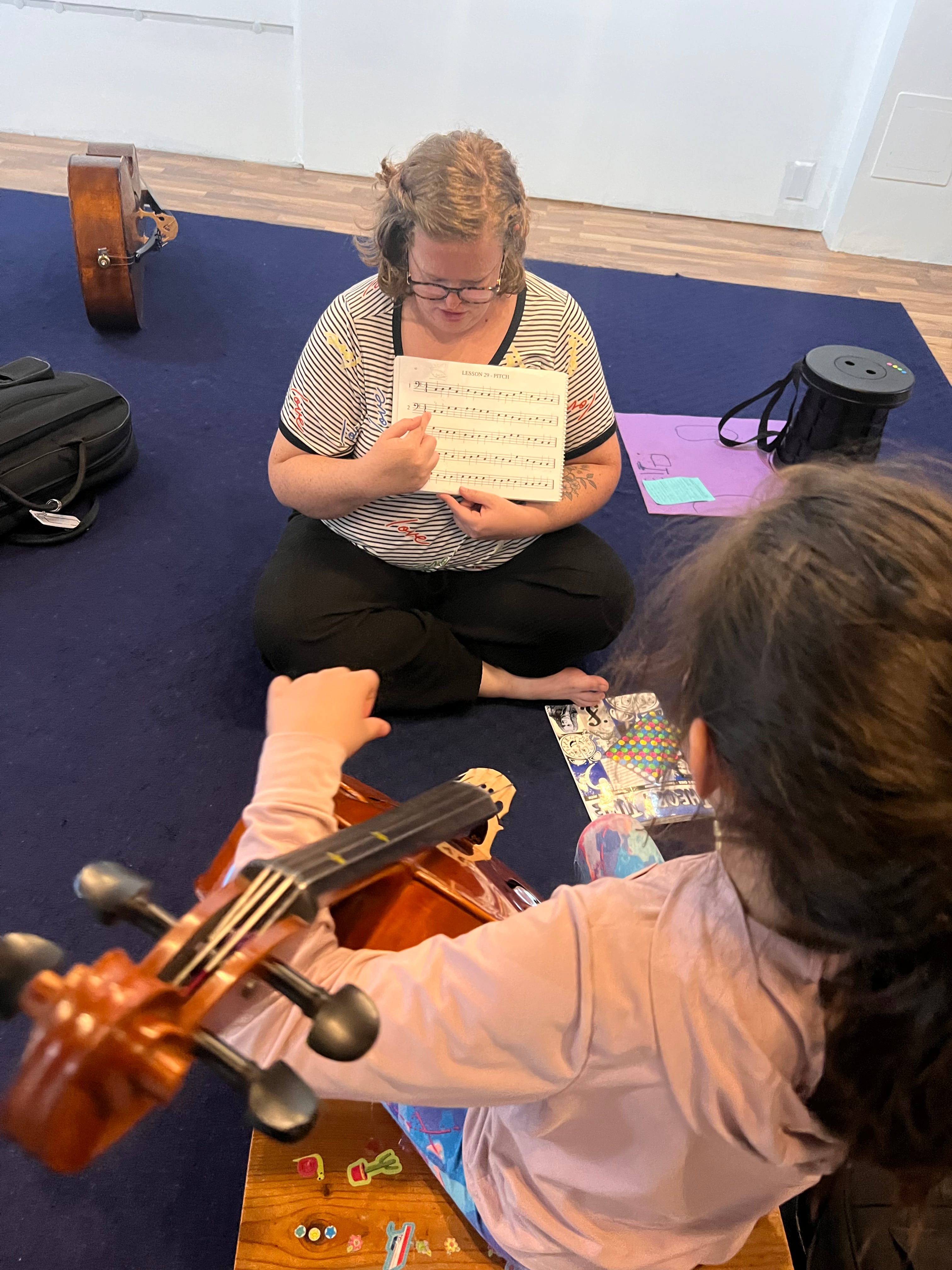
This week, tears welled in my eyes during one of my daughter’s daily cello practice sessions. The black-and-white large-note version of her cello book, “I Can Read Music,” went temporarily blurry as I saw it all click. I witnessed her brain make the connection: how each particular line and space corresponded to a note name, and each note name corresponded to a specific finger on a specific string on her cello, something I’d been explaining for what felt like years.
Her eyes lit up, and she suddenly sped through the exercise, which previously took a solid five to ten seconds between notes to execute. She got it. She was starting to read music.
It wasn’t just pride or relief—though I felt those too—but something more. As the tears fell, I felt the Spirit whisper: Pay attention, here is holy ground.

The house of Mrs. Grace Utsey, my childhood piano teacher, smelled of patchouli and Pine-Sol. Her piano, which sat against the wall in her modest kitchen, was a deep-brown wooden upright with (what looked like) genuine ivory keys. I remember the brilliant light of her keyboard lamp and her long pink fingernails, the soft, thin skin of her hands, knobbly with age. She lived to be 104 years old, by the way, but back when I was taking lessons from her, I was 8 or 9, so she must have been around 70. My grandmother would wait outside during our weekly lessons in her maroon sedan.
“The top number of the key signature tells us what?” Her voice sounded booming and lyrical, like an opera singer reciting dialogue. She’d wait for my answer with raised eyebrows.
“How many beats per measure.”
“Good! And the bottom number?”
“Which note gets the beat.”
I was ashamed to tell her, in spite of my ability to recite these rules by rote, in spite of my desire to please her (and all people in authority at that age), I had no idea what she was talking about.
What I did know was this: Mrs. Utsey would play each new song for me at the end of the lesson, and hearing it once, I wouldn’t need the music. I’d just go home and take a few hours to plunk it out by ear.
Sure, this took way longer than if I could just read notes, but the dark ink of her old scores made my eyes cross. The jumble of lines and spaces, the curly-que markings, and all their logic and rules were a meaningless foreign language of despair.
I could memorize the mnemonics and puzzle out new music when I needed to, but my difficulty reading was a deep source of shame.
Every Good Boy Does Fine. Good Boys Do Fine Always.1
There is a lot of talk about being good in music, isn’t there? And that message was not just for the boys, of that I was certain.
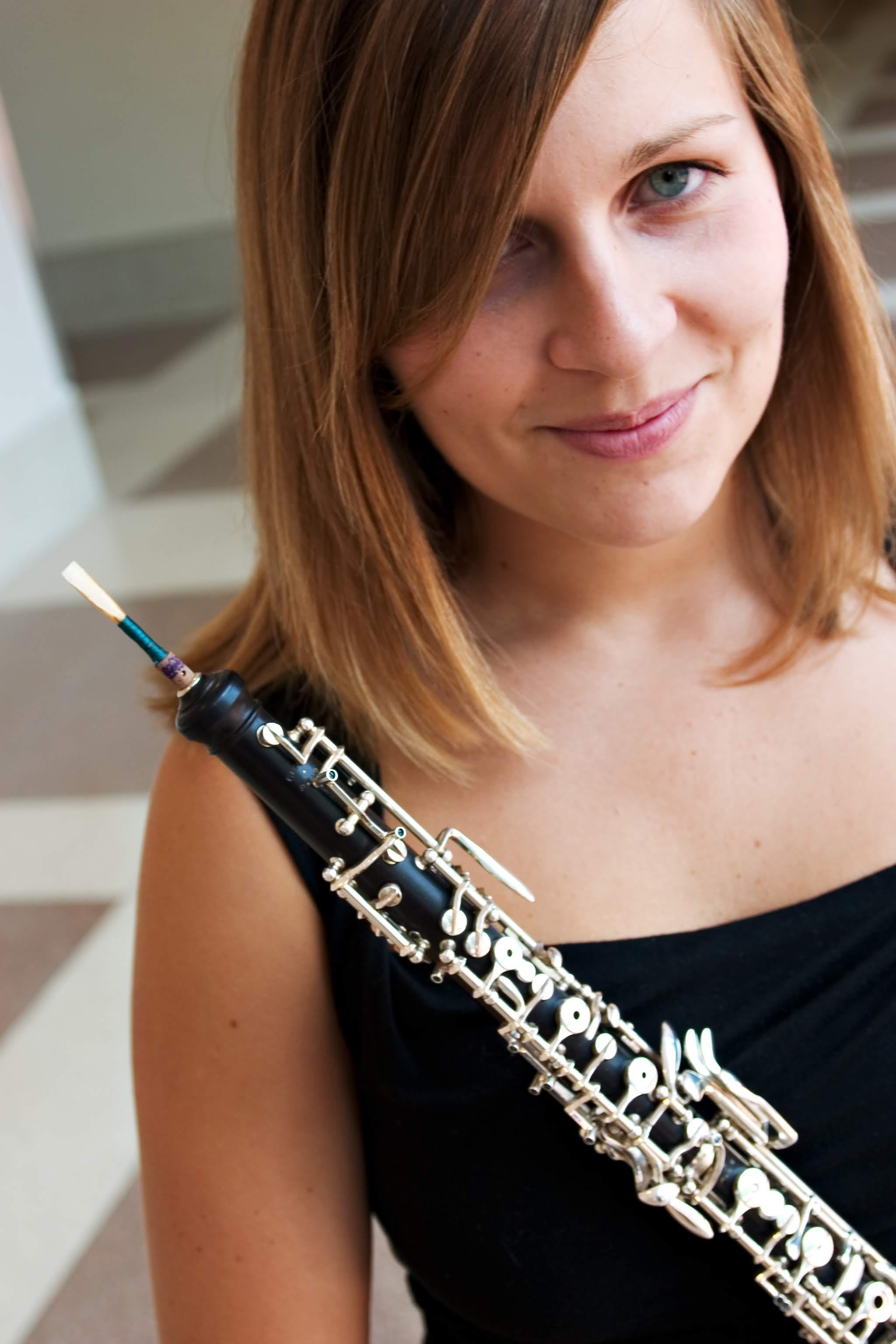
A decade later, during my freshman year of music conservatory, I found myself as the only oboist in a student reading-orchestra, a training group for conductors. The orchestra didn’t have public performances, just a bi-weekly reading session where new (to us) music would appear unannounced on our stands every Tuesday and Thursday. Beethoven and Mozart symphonies, Schubert overtures— the standards of the Western Classical canon— waited each week for the greenest-of-the-green, freshmen performance majors.
By this time, I was marginally better at reading music. Yet, I constantly peered around the metaphorical corner of my musical life, afraid of what was coming next. When I couldn’t get the music ahead of time to painstakingly figure out the notes and rhythms by myself or sit for hours hunched over in a cubicle at the library with the recording (this was before smart phones, when you had to ask a librarian to get the record or CD from the stacks), I lived with intense anxiety about being outed as a bad sight-reader.
When my oboe professor assigned me to the reading-orchestra, you can imagine my fear. In the first few weeks of the class, we mercifully played simple symphonies that had no oboe solos. I could hide and handle it, just barely. But something began to change. I started to build confidence. That was also when I began practicing sight-reading every day, in and outside of class.
In one rehearsal with the reading-orchestra, somewhere in the middle of sightreading Beethoven’s Sixth Symphony, I realized it: I am doing it. I’ve never seen or heard these notes before. I’m reading them. Not only that, but I’m not as afraid. It’s not perfect by any means, but I’m not lost. I’m here. I’m doing it.
After the reading, as I packed my instrument up and walked home, I smiled to myself. I knew it didn’t happen overnight, but this was the first time I’d ever felt free while sight-reading. I had played complex music I’d never seen before in public, and hey, look, I did not die! I may have even enjoyed myself a little.
All the decades of work, all the rote answers, and all the regurgitations of rules had brought me to this moment, when my friends and I could recreate this incredible soundscape of an 18th-century genius. Our clunky read-through whispered of a different kind of “perfect;” the windowless room in the basement of the music building became a gilded concert hall.
My heart soared. This was what all those rules were for.

If only the young girl hiding her faults from all the music teachers could have known that this is what is on the other side of all these rules, of learning to speak this language of music. If only she knew that one day she could live inside a score and be transported with a roomful of other musicians to a different place entirely; that finding fluency would mean freedom, not just from the shame and fear, but, in a way, from the notes themselves.
I wish she’d known that one day she’d understand it, like you do when you dream in a new language, that the gift of learning the technique is that the technique becomes something you no longer think about. Or as choreographer La Meri said, “The only reason for mastering technique is to make sure the body does not prevent the soul from expressing itself.”
My ear had been a direct line to what my soul most wanted to express, and for decades, my body and mind had held me back.
I wish I’d known that music, with all its rules and order, wasn’t a tool to measure my worthiness but a bridge to another world entirely, wings to grow so that, one day, I could soar.
In my doctoral study, I learned about the Pythagorean/Platonic idea called “The Music of the Spheres,” where the Ancient Greeks named that the distances and speeds of the planets’ orbits conform to perfect mathematical ratios found in musical harmony (like the octave, 1:2, or the fifth, 2:3). It is the visible/mathematical Form of Order in the cosmos. Philosophers looked to music as the most excellent example of Form and Rule, and when I read those treatises in my “History of Music Theory” class at Juilliard, it went right over my head. I didn’t enjoy relishing in music’s mathematical precision or perfection, because it took me back to my adolescent self at Mrs. Utsey’s piano, inadequate and insecure, lacking in skill forever and ever amen.
But this week, when I wept with joy, when we put down the cello and my daughter, if slightly confused and concerned, hugged me tightly, I finally understood why they spoke of music’s perfection like this, why Augustine took it a step further and connected the technical to the spiritual and named the Greek Forms of order and perfection “the cosmic manifestation of God’s divine blueprint.”
Augustine saw these philosophical ideas about beauty and perfection, aka The Forms, as a perfect, eternal blueprint for everything: the divine Logos of God spoken of in the opening of John’s Gospel. The order, beauty, and perfection of the planets, of music’s math, were all creation singing of God’s Word in Jesus.
“In the beginning was the Word [the Greek word Logos], and the Word was with God and the Word was God.2”
I wept into my 7-year-old’s hair because I sensed the Logos, I sensed God’s divine love, in her music making, in the new knowledge she’d acquired. I had a new, profound understanding through music that we are made perfect by what Jesus, the Logos of God, did, not by our own efforts or practice. I finally saw what all this perfection-seeking was meant to reveal: not my inadequacy but God’s unconditional love.
Truth is, we don’t need rules to connect us to God, just as we don’t need one specific technique to make beautiful music. We can still feel God’s goodness even if we don’t understand the doctrine of the Trinity, but something more opens to us when we do.3
As I watched Eva learn to read the bass clef this week, I realized that, while the rules, doctrines, and dogmas of faith are not God in and of themselves, they are a means through which the Logos can be experienced. She was beginning to speak God’s language, or one of them, to commune with the divine in a new way, and now we could do this together.
It takes most of us a lifetime to get good enough at playing music where the technique falls away, and you are one with the sounds you’re making. Even with all my training, this doesn’t happen every single performance or practice session. I feel confident in my reading skills now, but the pursuit of technical excellence never ends.
But, here’s the amazing thing: I can honestly say that (most days) this process doesn’t depress me anymore. It gives me life, because in my seeking more mastery, more excellence, I find God’s design for this world. The ratios of perfectly tuned intervals and the bright hazel of Eva’s eyes are both reflections of a divine blueprint of love. And what a miracle that I get to be part of that.

It is no surprise, then, looking back, that I approached my spiritual practices a lot like my music, pursuing “excellence” aka frantic over-performing to outrun my feelings of inadequacy. As a child, my eagerness to please the authorities by praying the prayers, memorizing the scriptures, and never missing youth group was really a cover-up for the deep fear that I wasn’t good enough for God to love me. I had great respect for this distant, almighty, Higher Power, just like I did for my music teachers. I had felt the Spirit calling me deeper in glimmers of grace, just like when the music made my heart swell, but deep down, I believed I had to get the “technique” of faith right if I was going to be loved. Every good girl does pray.
I realize now that this was one reason why it was so easy for me to leave church and my faith behind for a while as a young adult. I associated it with the same shame and perfectionism as music.
But what if the “techniques” and practice of faith were not there to be a standard to live up to, a way of measuring my goodness or worthiness? What if these practices of prayer and scripture study, this “fluency” in the faith, are ways that God is longing to love me, all of me?
“You shall love the Lord your God with all your heart, with all your soul, and with all your mind.”4 What if this is less command and more prophecy?
For decades, I’ve read that as a rule that I needed to live up to, instead of an invitation to surrender every part of me to the One who designed this blueprint, the One who made the stars and the perfect fifth and even me.
Can we still feel the presence of the divine without the technical faith practices? Yes, of course, just like I was still learning the music in my own way without reading the notes.
But now that I know what living inside a transcendent piece of music is like, now that I’ve grown the wings of musical fluency and my sound has soared through the air, I wish I’d had the courage to admit my mistakes and learn sooner. I wish I hadn’t been so afraid.
The fact that Jesus, the Word of God, the Logos, (like the Yeats poem says,) “slouches down to Bethlehem to be born,5” means that once and for all, we cannot ever earn God’s love by being perfect or trying to. Jesus, God’s perfection, broke into our world and has done that for us. Instead, loving the Music of the Logos means taking our place in the orchestra of God’s perfect love.
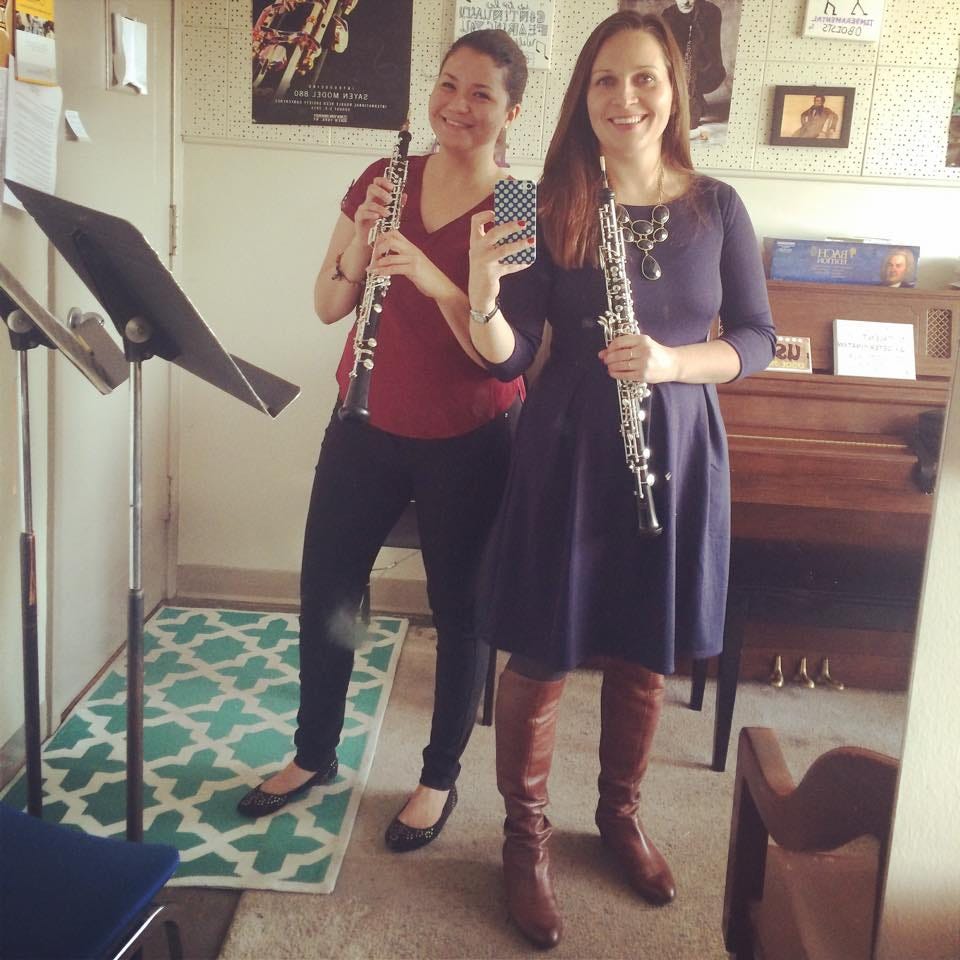
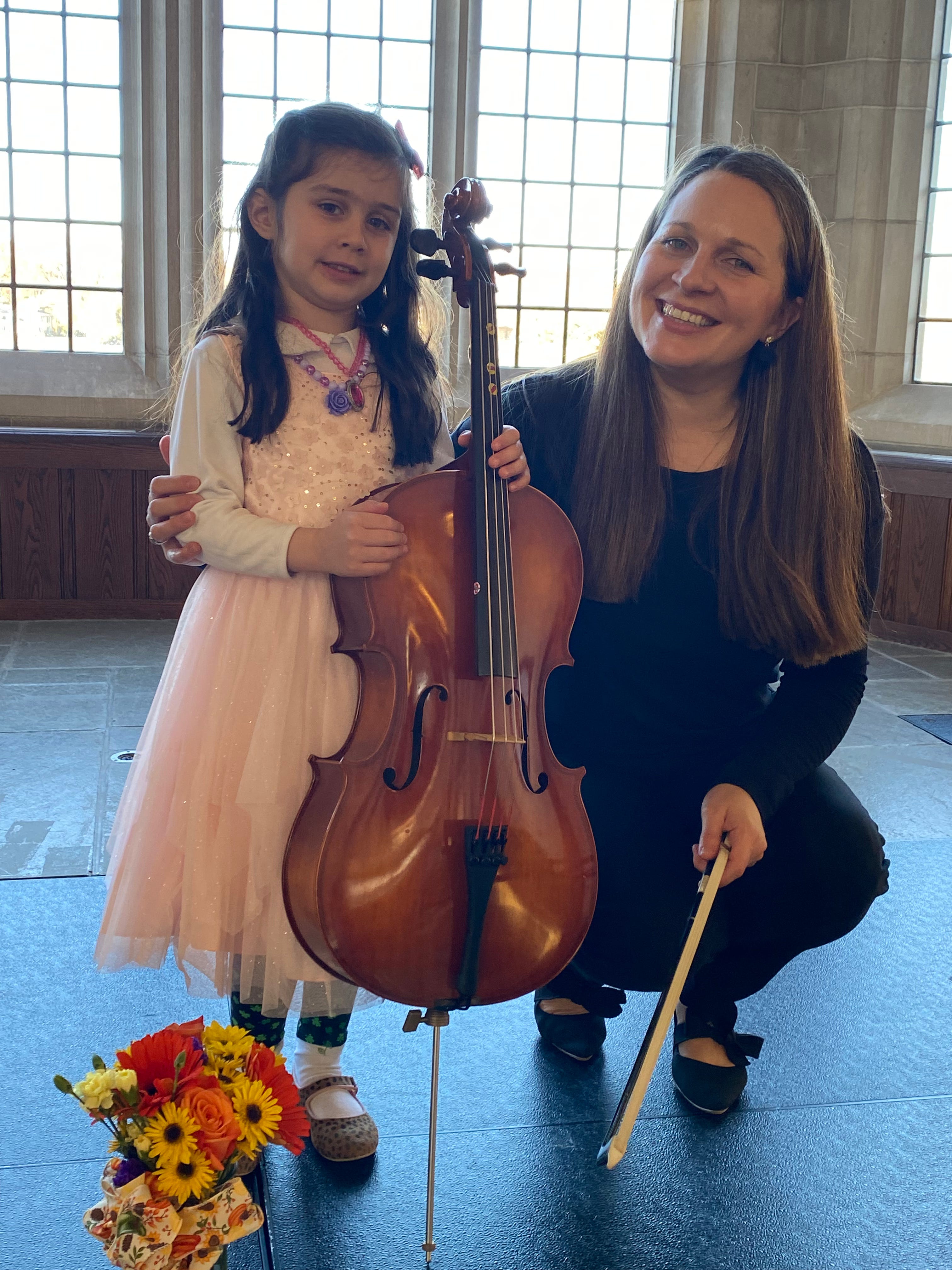
When I was a college music professor, I’d begin each lesson by sightreading a duet with my student. I encouraged them to make mistakes and make them boldly so that I could help. I knew I didn’t want them to have the experience I had. This was not a place to hide but a place where they could move past all that was holding them back. That started, though, with being honest, not with seeming perfect.
Now, as a mother and a seeker, I yearn for this childlike trust of seeing each act of faith, each note I play, as a divine duet with my Maker, embracing vulnerability and learning to lean on the Logos—both the perfection and the humanity of Jesus.
This journey, from the shame of faking musical literacy to the transcendent joy of finally playing by sight and witnessing Eva’s breakthrough, illuminates a profound truth: technique, whether in music or in faith, is not a measure of worthiness but a pathway to freedom.
This is the great paradox of my faith these days: on the other side of obedience, of the discipline of practice, is an even deeper devotion, a soaring freedom I didn’t expect.
In this surrender, may we each find not limitation or discouragement or shame, but the boundless expanse of another world, hidden right here in this one, where every note and every prayer becomes the wings to help us soar.
Thanks for being here.
This Friday on the podcast, I’ll share five things to try when you’re struggling with creative technique. Make sure you subscribe here to get those episodes in your inbox every Friday.
I leave you with a little clip of Eva showing her teacher how she can read the notes in her lesson this week! (Enjoy my loud mom giggle at the end!)
These are common acronyms we memorize to help us remember the lines of the treble and bass clef staves, in case you didn’t know!
John 1:1 NRSVUE
But seriously, can anyone fully understand the Trinity?
Matthew 22:37, KJV
I look forward to your podcast every week. I love every single one.
I can’t even put into words what this piece of writing speaks to my heart. It’s going deep…I think it is unlocking something in this always performing perfectionist who has had my own journey to freedom. But this! I will be reading it over several times to process!! Thank you!!