

Welcome back to the series “Art’s Open Door,” where we’ll explore the profound ways creativity and spirituality intersect, inviting us into a deeper sense of well-being, connection, and joy.
“Great paintings—people flock to see them, they draw crowds, they’re reproduced endlessly on coffee mugs and mouse pads and anything-you-like…But—if a painting really works down in your heart and changes the way you see, and think, and feel, you don’t think, ‘oh, I love this picture because it’s universal. I love this painting because it speaks to all mankind.’ That’s not the reason anyone loves a piece of art. It’s a secret whisper from an alleyway. ‘Psst, you. Hey kid. Yes you…. An individual heart-shock…. Yours, yours. I was painted for you.”
Donna Tartt, The Goldfinch
A river’s consolation
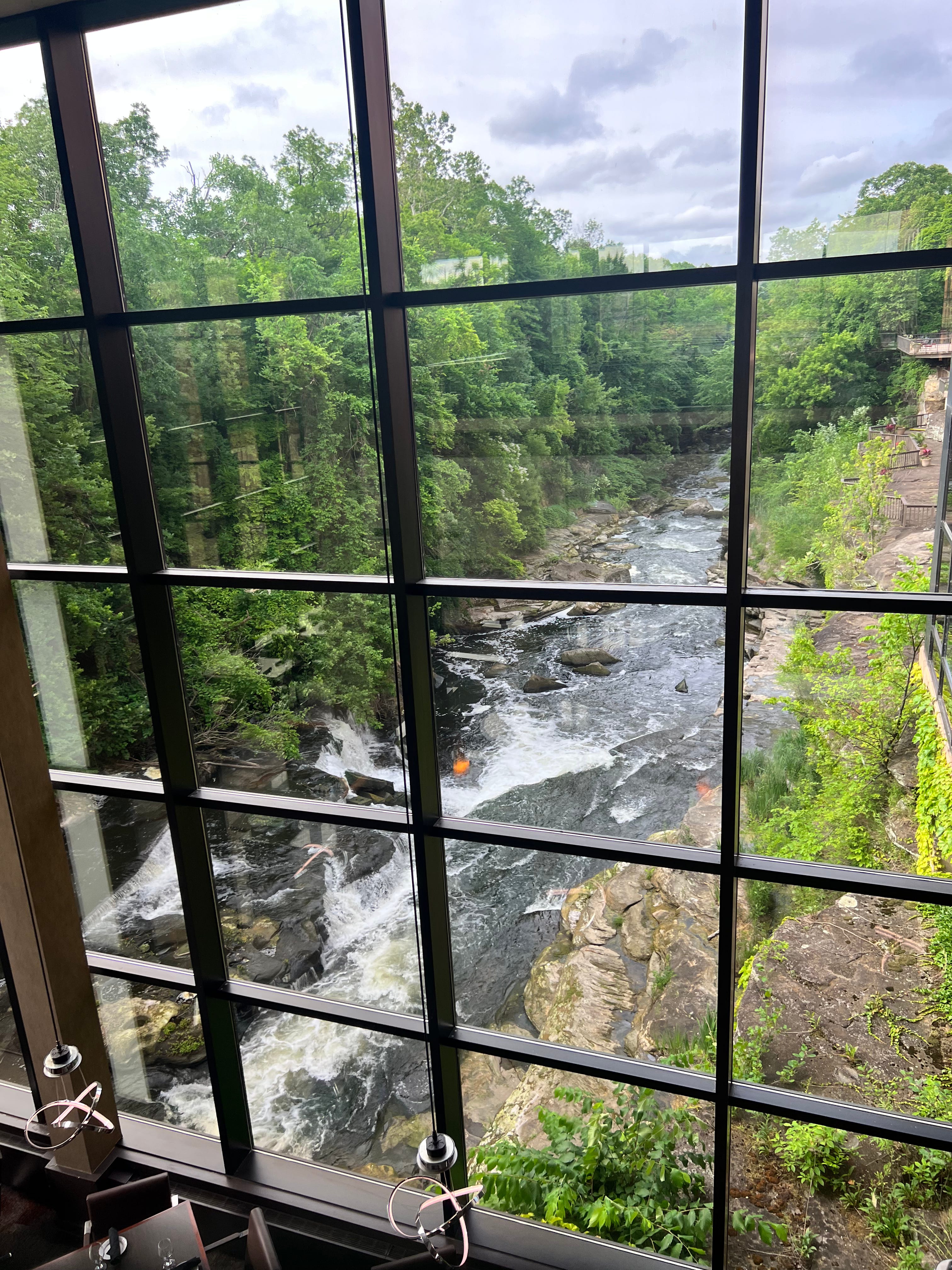
On the day we buried my grandmother, I woke up in a room with a river view—the Cuyahoga River in Akron, Ohio, a town I’d visited once or twice a year my entire life. The community my mother grew up in was named after this river, but my grandparents’ home on Marcia Boulevard was in a newer development away from downtown, a turn-of-the-century bungalow with a screened-in porch they lived in all summer, a shady backyard garden that the deer loved, and a dry, clean basement. In the spare bedroom upstairs, she’d read the children’s books in the best voices. When you called her name from across that house, she’d respond with a gentle and charming whistle, her way of saying she heard you, that she was there, that she was alright.
On this particular morning, as I yawned awake in my hotel room, I was painfully aware that her house was silent, that she wasn’t there at the dining room table doing a puzzle. Her body waited for us at the funeral home.
I stood and stretched, then gasped as I opened the thin hotel curtains and looked down.
Some rivers have banks that are dense with vegetation, lush foliage that makes the water seem alive with fertility. I imagine the Amazon like this. The life source of a whole rainforest pulsing like an artery. I saw the Mississippi in New Orleans once, as wide as a lake. Its muddy waters swirled steadily as the levees buoyed the river cruisers, the air so heavy with humidity it felt like swimming to walk.
But this river in Akron, the day we buried my Daba, looked like a wound: centuries’ worth of rock worn down into a steep rocky ravine that throbbed with pain. I craned my neck so hard to see it from our ninth-floor window; it seemed to run underneath the hotel itself. I told my sister, with whom I was sharing the room, that I was going for coffee, and moments later, I stood in the empty basement restaurant, its floor-to-ceiling windows offering a better view.
I felt as if I were standing at the bottom of a rock quarry. The water had carved such deep crevices into a city of concrete. Above me were the highway overpass, the factory smoke stacks, remnants of Akron’s industrial age. And below it all, a rushing torrent of water, a deep riverbed like a funnel. The earth had broken open to reveal some ancient ache. As I stood along the banks that morning, the smudgeless glass between me and the land, my grandmother's city above me, the water like magma falling over ice-age sediment, I added my tears to its flow.
I’d read in a brochure in the lobby that some say the Cuyahoga River was named after an indigenous word meaning “crooked” because it dramatically changes course in Akron. It flows south from Cleveland and Lake Erie, but just past the Sheraton where I stood on the morning of my Daba’s funeral, it makes a U-turn. This isn’t a man-made phenomenon but a natural geological process set in motion by the last glacial retreat of the ice age.
I thought of the men and women of this land who were here before the European settlers. I thought of the wars fought and the treaties signed and likely broken. I thought of the fires that raged when my mother was in high school, pollution making the rapids themselves catch fire. I thought of my Daba shoveling snow that would melt and evaporate and rain back into this river. I thought of all the water that had run over these rocks. I thought about how it was somehow still running now, even though she was gone.
Like swearing an oath or pronouncing a blessing, I held my hand against the window. I felt the rumble of the river’s strength against the glass.
In lieu of flowers, my Creator sent me a river. Her torrent, rocky and reckless, consoled me. She did not look away as I cried. Her roar whispered of the creator's love. The river’s message, a question ringing through the bright Ohio morning: If the water could flow through so much, couldn’t I? What if this permanent transience is the current of life?
The Wisdom of the Universe
I think what we love about nature, what makes us want to become one with it, is the fact that some part of our DNA remembers that we already are.
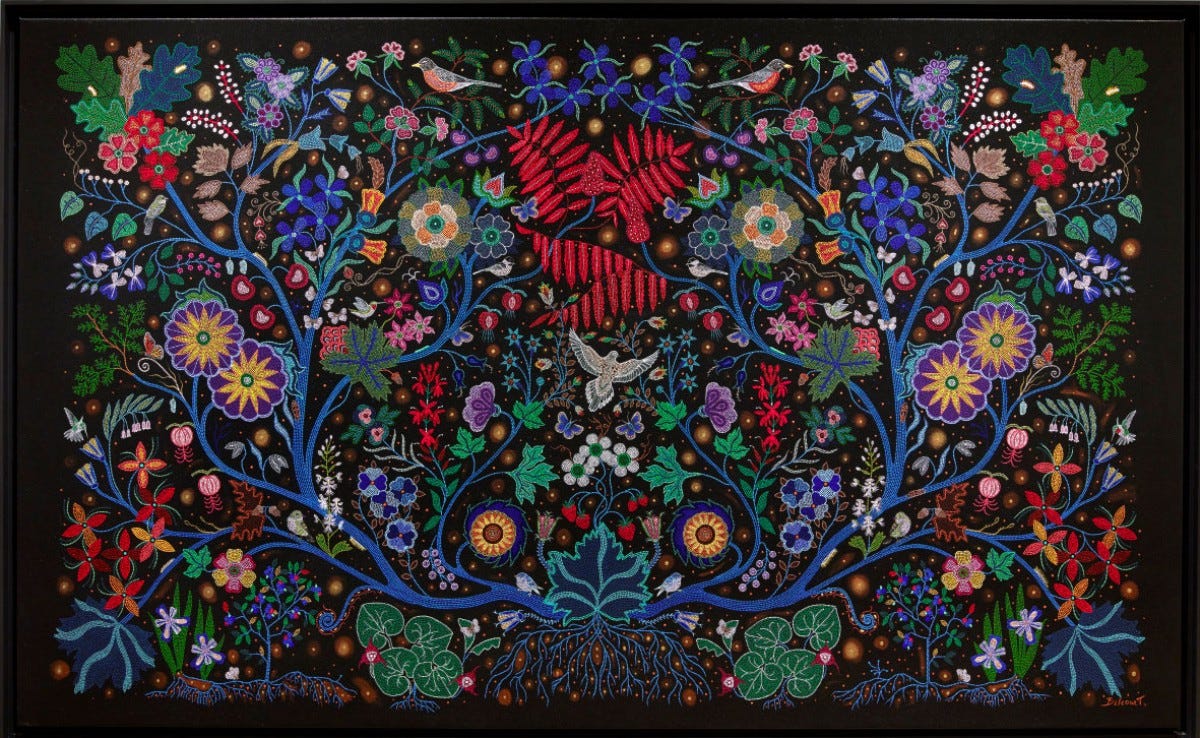
The artwork of Christi Belcourt, an indigenous visual artist and activist, speaks to the interconnectedness of all things. She says, “All species, the lands, the waters are one beating organism that pulses like a heart. We are all a part of a whole.”
In grief and in joy, we stand in front of the rivers and sunsets of our lives, feel the spring wind against our skin after a long winter, and it is the closest we can get to seeing our love, our pain, our hope on a grand scale. God’s artwork speaks of an audacious, unapologetic, abundant, extravagant love—one that holds space for grief and pain—and we are part of it.
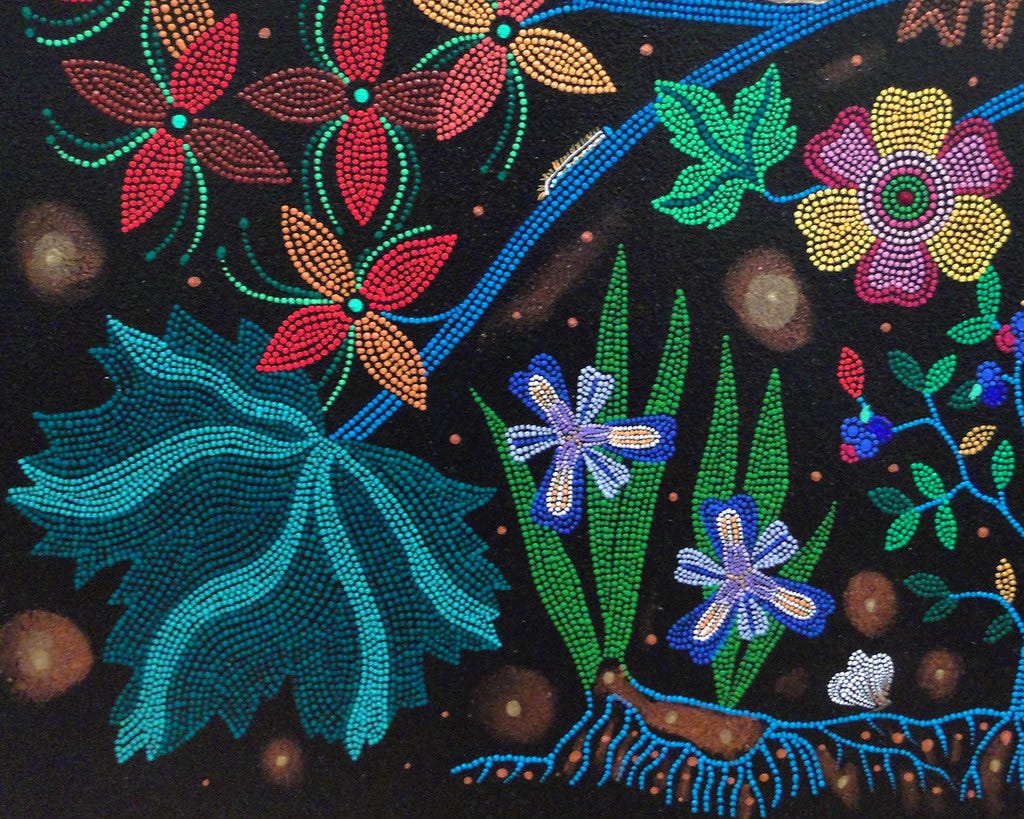
This large-scale love and its whispered wisdom is beautifully manifested in Christi Belcourt's 'Wisdom of the Universe.'" The towering, nine-by-seven canvas imitates traditional Métis beadwork against a dark background. It teems with life, depicting colorful plants, flowers, and animals, many of them endangered in the artist’s native Ontario. In her artist’s statement for the piece, Belcourt says, “The planet already contains all the wisdom of the universe, as do you and I.”
The first time I saw the impossibly bright reds and blues of Belcourt’s canvas, the lush and wild symmetry—which upon closer inspection is playfully disrupted here and there like nature itself—when I heard the questions it asks about abundance and potential loss of the plants and animals it depicts, I felt the artist’s yearning in the glimmering roots. I sensed her broken heart for all she feared losing and had already lost. I'd heard the same urgent cry of beauty and brokenness, a deep calling to deep, from my river in Akron.
That day by the river, the rapids spoke to me of the irrevocability—the cost and the beauty—of love. The time-worn chasm of rock, the persistence and strength of water for millennia, finding a way, it met my longing with powerful and particular questions that pierced my heart with wisdom. I saw my grief and pain reflected in jagged rock and raging rapids; this integral part of an ecosystem carried a message just for me. Like Belcourt’s tiny dots making up a complex and intricate image, one river in a landscape was greater than the sum of its parts.
The wisdom of creation is not a soliloquy or sermon but a whispered question left hanging in the air. A discourse rather than a proclamation, impossibly particular yet universal.
Painted for You
In Donna Tartt’s Pulitzer Prize-winning novel, The Goldfinch, we hear the story of Theo Decker, a young boy whose mother tragically dies in a bombing of The Metropolitan Museum of Art. Theo survives, and in the aftermath of the tragedy, he steals Carel Fabritius's painting, "The Goldfinch," a small Dutch masterpiece that becomes a constant, if turbulent, presence in his life thereafter.
At the end of the story, his friend (turned family) James “Hobie” Hobart says these wise words about the power of the painting, the power of art in general: “But—if a painting really works down in your heart and changes the way you see, and think, and feel, you don’t think, ‘oh, I love this picture because it’s universal. I love this painting because it speaks to all mankind.’ That’s not the reason anyone loves a piece of art. It’s a secret whisper from an alleyway. ‘Psst, you. Hey kid. Yes you…. An individual heart-shock…. Yours, yours. I was painted for you.’”
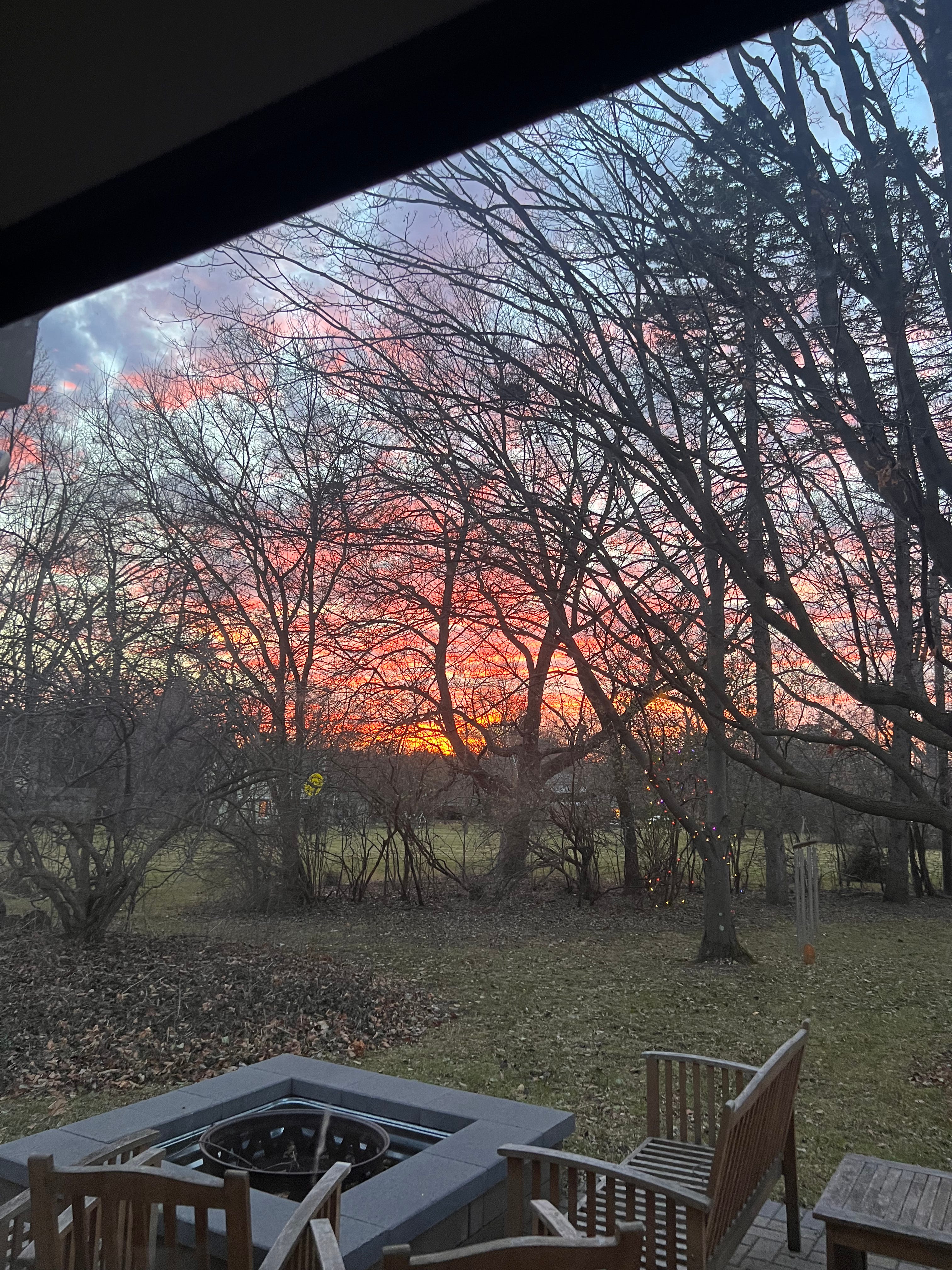
We love our sunsets and rivers because they are, by very definition, part of the universe, yet they feel anything but universal. Suddenly, the sky on fire, the sun sinking into the sea, a cardinal crossing your path, these works of art are how God loves us, how our creator calls to us, whispers from an alleyway, asks us questions we are invited to carry like a well-worn rock from the riverbed.
Art echoes the wisdom of the universe—it speaks of a love at once individual and omnipresent, an interconnected ecosystem like a sweeping tapestry of color which, when you look more closely, is crafted from thousands of tiny dots.
Art sings of these paradoxes. It invites you into a conversation; its questions whisper into your deepest places of pain, and it calls you gently toward healing, a new understanding that stirs the pond; it is part of a whole, but somehow created just for you.

From universal to yours
As a child, I saw or sensed what Richard Rohr calls “The Universal Christ” everywhere in nature. I felt a kindredness with the authors of the Hebrew scriptures, who personified creation: "The heavens declare the glory of God; the skies proclaim the work of his hands" (Psalm 19 NIV). “The rivers clap their hands, and the mountains sing with joy” (Psalm 98, NIV). The writers of these ancient holy texts, those who saw the rivers and mountains multiple millennia ago, they stood on the same planet as I do, on the fertile banks and the rolling hills where they sensed both the power and the pain of this place, the life in the dust that humans were formed of, the love of the one who created it.
Summer in rural South Carolina meant the gift of long twilight. One evening, I remember swinging alone on the church playground. My older siblings must have been inside the small annex building in Methodist Youth Fellowship; my parents were likely inside cleaning up Wednesday night church or talking with friends my father had known quite literally all his life from having grown up in this church. Wherever they were, I was blissfully alone with God. I relished the moments to sing quietly to myself on the playground, even though on this particular evening, I was starting to feel I was getting too old, as a soon-to-be fourth grader, for swings and slides.
I remember feeling God in the wind against my back with each pass of the creaky swing. I would go as high as I possibly could and then launch my body forward, sending my 8-year-old frame into the air. Even back then, I had this sense that God loved me. I knew that God watched me, like a mother at the window, as I attempted to fly. I felt my creator smiling. I felt God loving me in the blues and oranges of the South Carolina sunset; in the grass, I sensed the lifeforce of this planet, my home, and I was grateful that it gave me something soft to land on. The entire world felt like a gift, a playground, from one who delighted in me.
Fast forward 30 years to another swing set; I am the mother, watching my children from the window. Just a day or so before, I had learned of my grandmother’s death.
It wasn’t that I didn’t still sense a universal goodness all around me. The sunsets alone that summer had been a balm for my weariness, a tenderness in the earth’s new growth that season seemed to abound. I felt it in my precious, healthy children, creations that let out familiar squeals of delight, theirs in the Michigan twilight with speckled skies ablaze. But my childlike view of God was being drowned out right then by the cacophonous sounds of creation groaning (Romans 8:22). Nature seemed no longer like a loving mother watching from a close distance but more like some twisted death trap that threatened to destroy us all.
As I watched them play, I thought about all the things God had created that could hurt us. The yellow jackets. The snakes. The poison ivy. I felt tears right behind my eyes, and the temporary nature of all things seemed to be slapping me in the face. I thought of all that was left to do before I packed up and drove to Ohio for the funeral.
Daba’s death was no surprise; she’d been declining. She was almost 90 years old. And yet, the pain was surprisingly sharp. No matter how hard I tried, no matter what nature would have me believe, death did not seem natural, certainly not good. It felt like she was being ripped from us. I didn’t know how to explain it to my children, who were five and two. I didn’t know how to explain it to myself, either. The loss was too great.
And this is where my faith became particular.
I don’t know where the thought came from, or maybe I do; I’ll just say that it didn’t come from my own brain. It flew across my consciousness like a firefly, glowing for a second and then disappearing. As I watched Eva attempt to fly from our swings like I used to all those years before, while my mind was halfway to Ohio, ready to stand with my mother as she buried hers, I let the tears run down my face. And in that moment, Christ—creator turned creation—whispered across the alleyway, like Theo’s great painting, working his way so far down into my heart:
Didn’t I have a mother, too?
And it was then I believed again, like a child.
The sky sang out, Yours, yours, I was painted for you.
God’s all-powerful grace pulls the threads of the universe together, and in Christ—a flesh and blood human with a mother whom he loved and lost—in him, a universal God became particular.
Whispered Wisdom
And what did Jesus love more than questions? In the Gospels alone, he asked a recorded 307 and answered only three directly. His parables left listeners standing there, incredulous, mouths gaping open.
“Who do you say that I am?" (Matthew 16:15)
"Where is your faith?" (Matthew 7:9)
“Do you love me?” (John 21:15-17)
“Do you want to be healed?” (John 5:6)
It seems our only choice is to follow him if we want to find out.
It is the humble question-askers, those patient and trusting enough to tolerate these impossible queries he left hanging in the air—it is these meek, Jesus tells us, that shall inherit the earth. (Matthew 5:5)
What does it mean that we have a creator who isn’t always so interested in placating our desire for control or works-righteousness by giving us answers or making specific generalized prescriptions? What does it mean that God would rather engage our minds, invite us into a holy discourse that, in my lived experience, makes faith take root, find fertile ground to grow?
Since that day at the window, since that day by the river, I make it my practice now, when in nature, to listen for the questions from Jesus, his whispering:
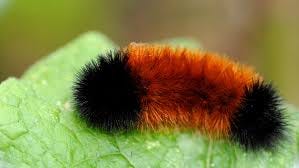
Before a Woollybear Caterpillar becomes an Isabella Tiger Moth, it creates a cryoprotectant tissue, surviving by literally freezing itself solid until spring, stopping its own heart, freezing its gut, and ceasing its blood from pumping.
When I learned of this mysterious creature, I heard the wisdom of the universe whisper: Are you so concerned with what the butterfly will look like that you are missing the strength and miracles offered you in the caterpillar stage?
Walking amidst the pines, the brown needles at my feet, I realized: evergreens, contrary to popular belief, do actually lose their leaves. I read that they usually do so while new growth is already coming in, so we don’t notice the needles falling until after the fact. The evergreen goes through the same process as deciduous trees, but differently.
The whisper: Do you look at your deciduous sisters and envy their color? What if I have a unique process for you? Will you accept the gift of release, to let go of all that you grip so tightly, in my time?

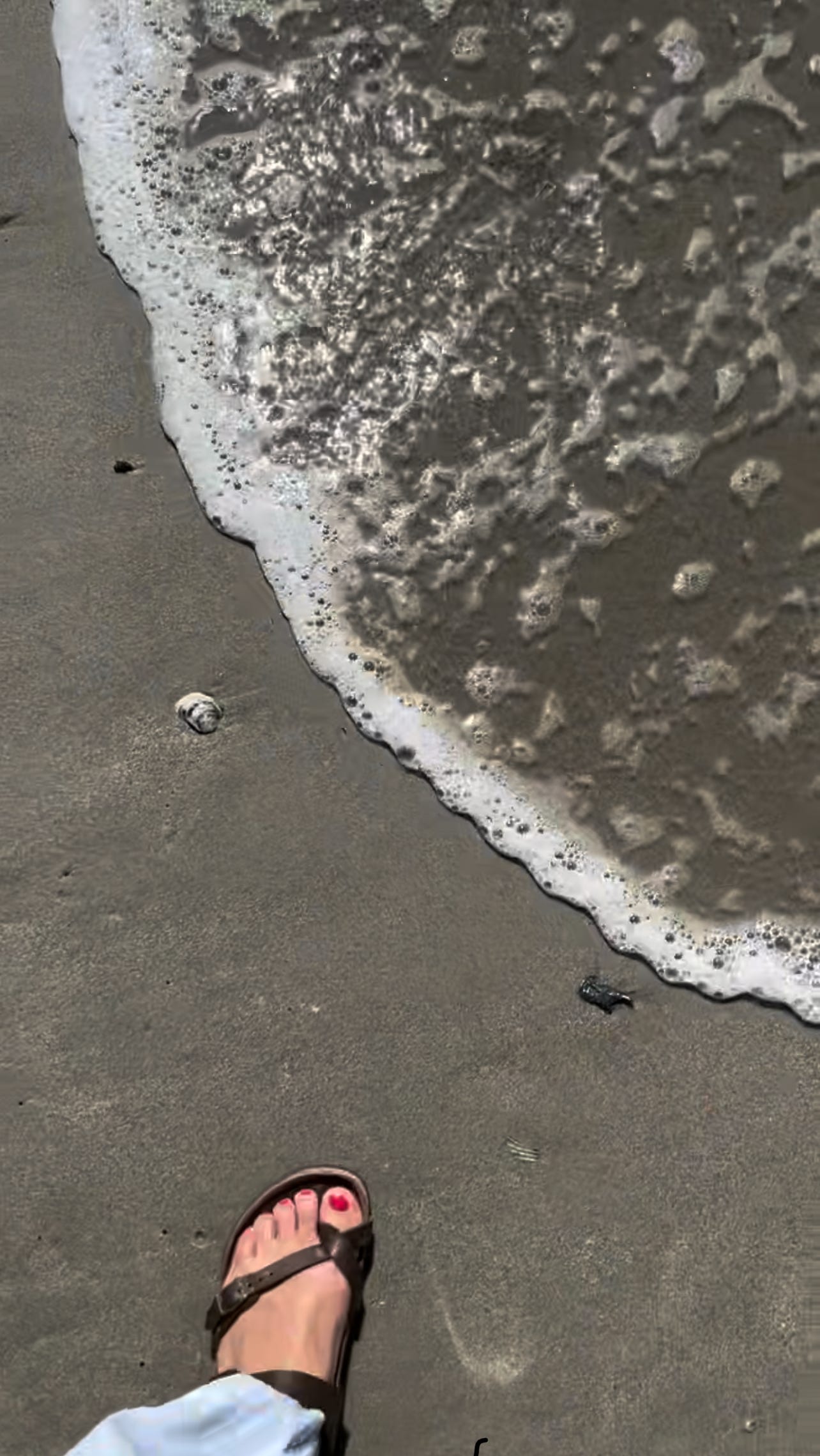
Tides are caused by the gravitational forces exerted on the Earth by the moon, and to a lesser extent, the sun. Today, oceanographers are able to predict the magnitude and time of the low and high tides for a given location up to a year in advance.
As the waves beat against the boat, as the tides roll up onto my ankles, as they wet my sandals, Jesus asks, What, besides me, has a pull on you?
Bonsai trees don’t have special seeds that make them miniature. It’s the pruning and planting, their conditioning, that makes them small. If you put the sapling in a different environment, if you stop pruning it, if you let it grow outside in freedom, it can become the size of a full-grown oak tree again.
When I have been asking, “Why can’t I grow?”, wisdom whispers, Is this the right pot?

The Amazon rainforest contains 80,000 different plant species. Twenty-five percent of the world’s medicines are derived from those plants, and 70 percent of all plants with anti-cancer fighting properties exist only in the Amazon Rainforest.
All this time, I’d been busy believing I had to create my own goodness or contribution to society, but I never stopped to consider that I was more like a rainforest than a robot. The whisper: What wisdom have I hidden within you?

The endangered creatures from Belcourt’s painting, the Dwarf Lake Iris, the Eastern Prairie Fringed Orchid, the Karner Blue butterfly, the Cerulean Warbler, and the Acadian Flycatcher— these are questions our maker asks, too:
What gifts have I given you to help the world heal?
May art be an echo
I often sense, standing in front of a river or in a museum face-to-face with a towering canvas of color, that everything I’ve ever loved about art—every goosebump, that tightness in my throat, the rush of mirth—the more I think about it, the more it feels like what I love about art is really what I love about God.
When I look at the sky, when I seek, I find God there, seeking me. The “with-ness” and vulnerability in a self-portrait, the power of ancient glacial sediment to make rivers change directions, each tiny “bead” in Belcourt’s canvas, so particular in a universal whole: what if God, as artist, loved creation into being, and what if this is how God is still loving us today?
And Jesus, being the wisdom of the universe himself, Logos1, God’s particularity, who was with me on that church swingset when I was eight, who stood with me by the mighty Cuyahoga—who goes with me now, who goes with you—let us never forget, my friends, he is Lord of nature and he has conquered death.
Before he died, he told a crowd, “And I, when I am lifted up from the earth, will draw all people to myself” (John 12:32). How? We ask. When? Why does this life still feel so hard? In response, we get only more questions, but hidden within each one is the whispered universal answer: Love, love, love.
May we always have ears to hear the quiet queries of creation. May art be a way you are drawn to him. May you be meek enough to live the questions that sing of God’s particular love for you, in Christ.
In the face of all the brokenness of this specific universe, which demands we hold the paradox of right now and not yet, the permanent transience of every river and every life, may you sense Jesus like a mother, a true Mother of Nature, longing to gather us like her chicks (Luke 13:34). He is at work in creation and in me even now, bringing salvation (from the Latin for “healing”), watching from the window, making all things new right before our eyes, one canvas, one sunset, one caterpillar, at a time.
And as an artist yourself, may you set about the work of healing the world, with God’s help. To fight for all that is endangered, to steward this gift of God’s abundant beauty.
May you collaborate with all that is already in motion, joining the current, the flow of living water—but watch out, it has been known to change your path.
May you add your voice to a chorus that’s been ringing since our maker first breathed this world into existence.
May each work of art be an echo of that first breath, a whisper of wisdom, for every listening heart.
John 1:1-18