

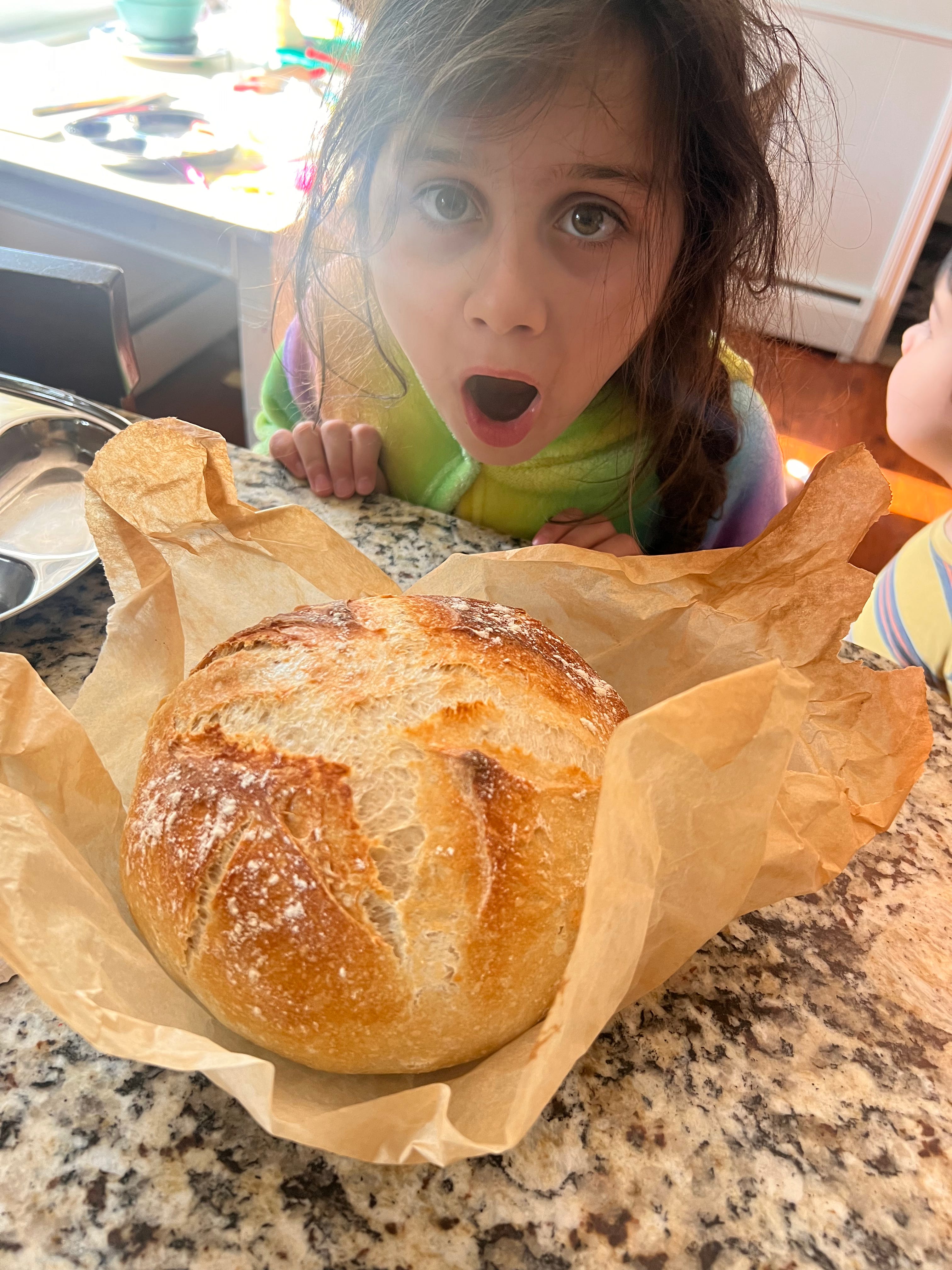
We walked into the sunny kitchen one afternoon recently, and I heard my daughter scream.
“Mom! It’s ALIVE!”
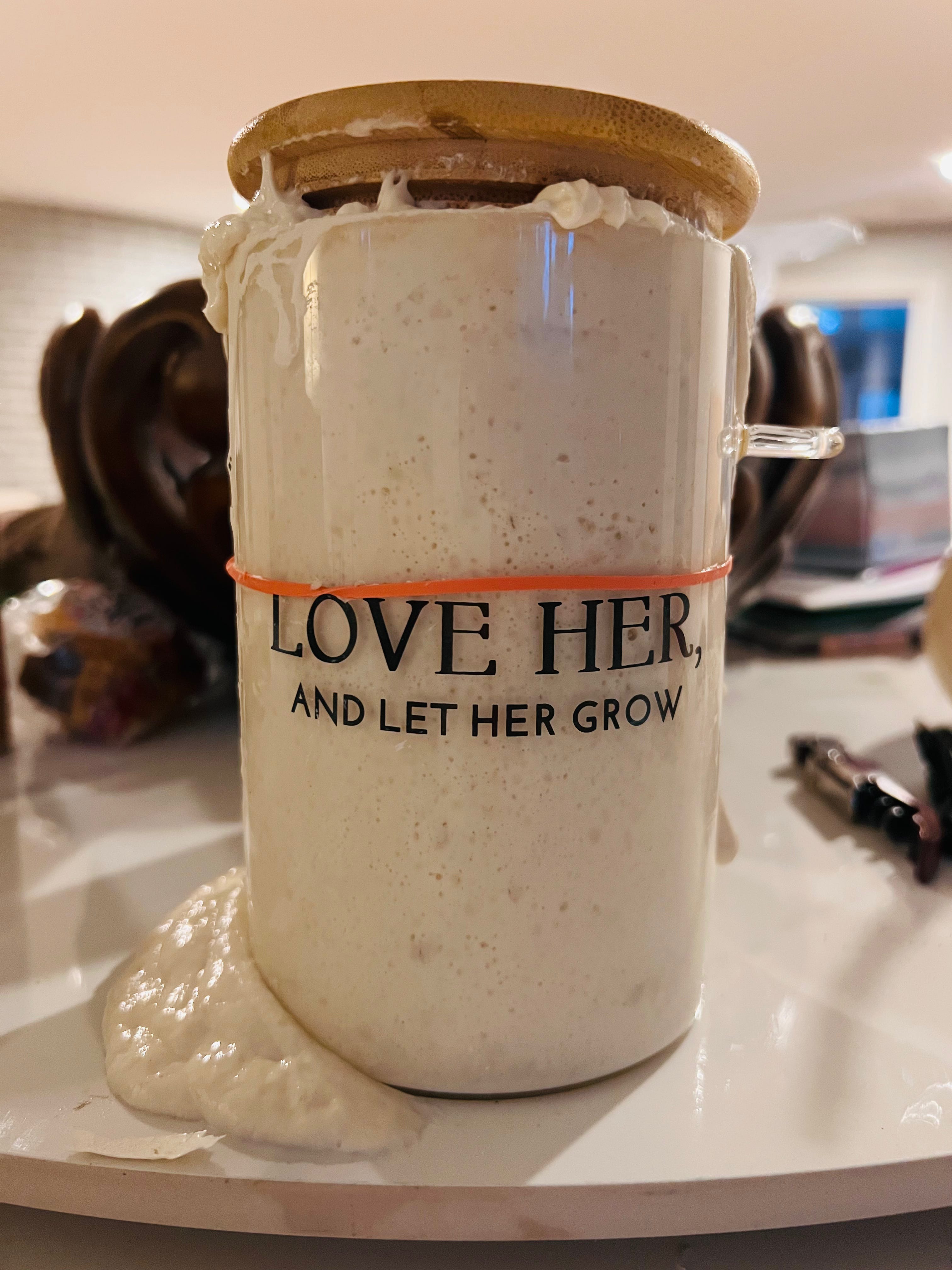
I rushed into the room from the garage. The sourdough starter had more than doubled in size and was overflowing its glass jar, dripping dramatically onto the counter, like something out of an evil scientist’s lab.
“When we left, it wasn’t even full!” My 8-year-old’s eyes stretched wide.
“Time to make the dough,” I said cheerfully, but by then she was already in the backyard. Apparently, the thrilling drama of overflowing starter only lasts until the soccer ball calls.
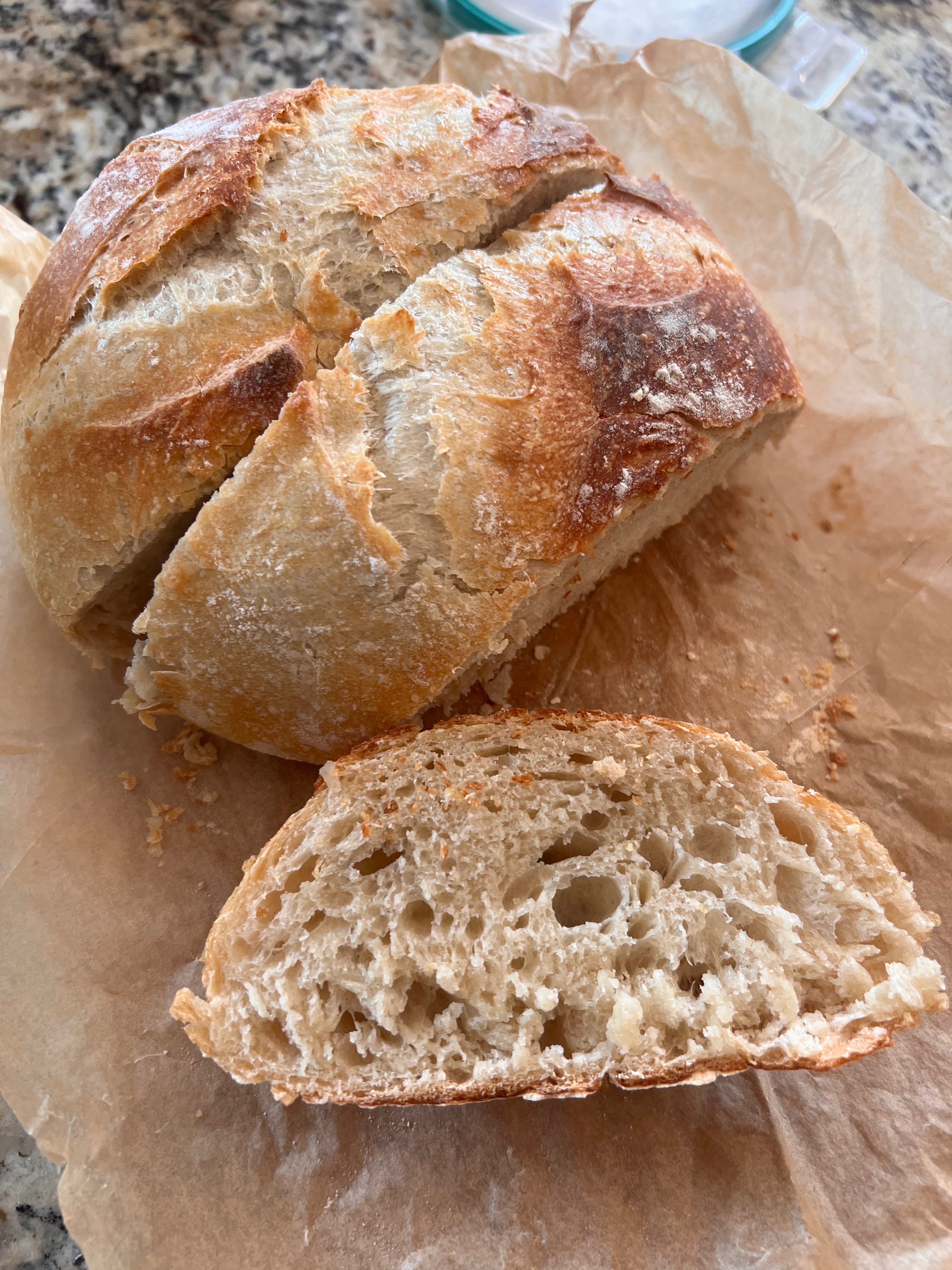
The starter is one of the many things I love about making sourdough—its wild yeast and lactic acid bacteria doing their thing; it feels like magic.
I was never a great baker. As fastidious as I am about many things (ahem, oboe reeds, for example), the exact measurements of salt and the finicky temperatures of butter—I don’t know, I just can’t. I like to have options and to be able to experiment without fear of ruining the texture. Sourdough feels more creative to me. Most of the tricky parts of making great bread involve waiting for science to work and learning how to see the signs that the right things are happening. Plus, even if you don’t get the rise you want, the bread usually still tastes pretty good. (Ask my kids and me how we know that last fact!)
I’m telling you all this because there’s a metaphor in here. Of course there is.
But first, back to the kitchen and the overflowing starter.
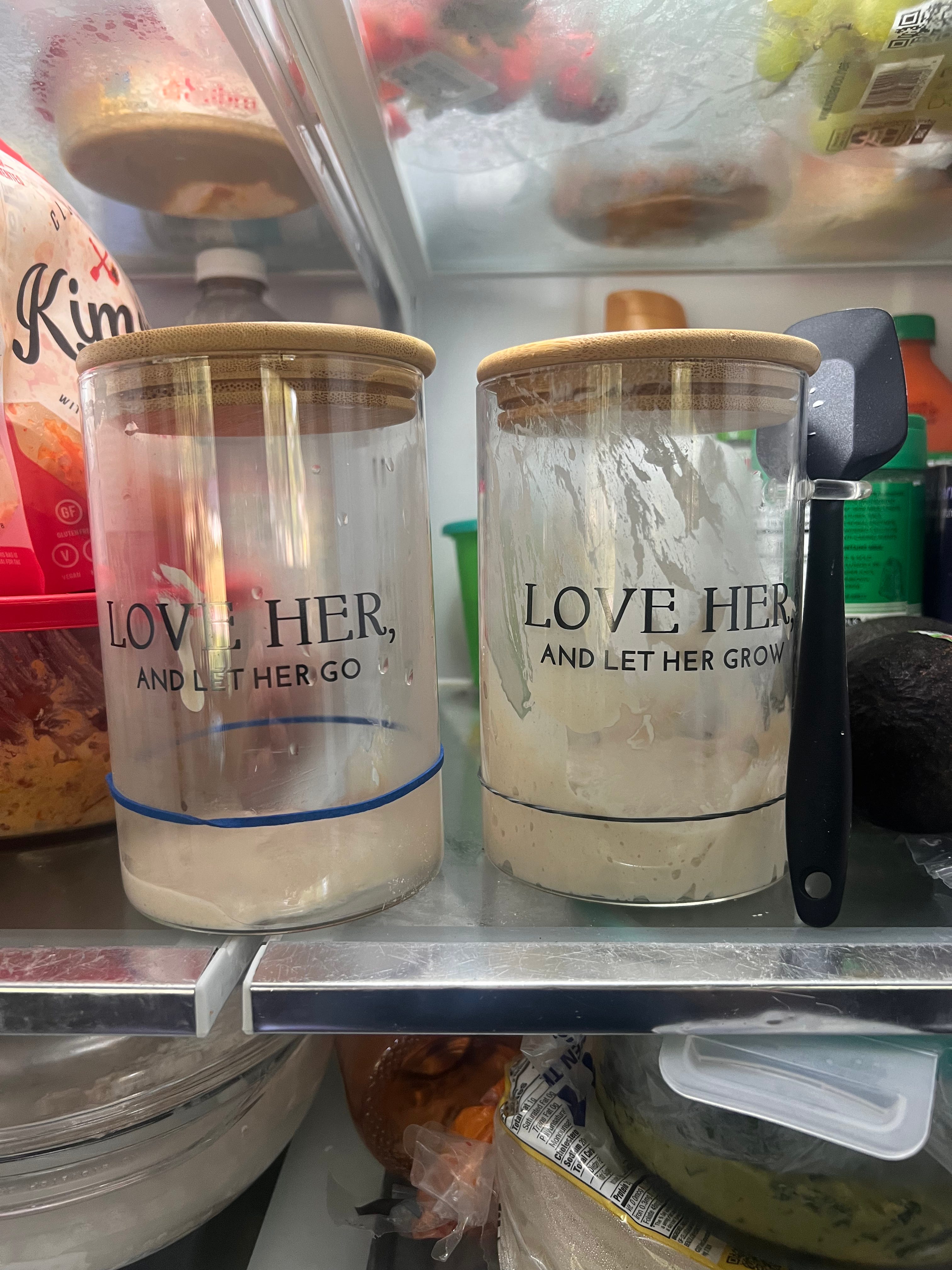
Any great sourdough baker knows that you need to put your starter in a tall-walled glass jar with a lid that does not block airflow but does keep out fruit flies. You can finagle your own container with a big mason jar, some cheesecloth, and a rubber band, but as a receptacle hoarder, I wanted something a little more official. I found the perfect jars on Amazon. One of them says “Love her, and let her go” (for the discard), and the other says “Love her, and let her grow” (for the starter). Clever, right?
Before I got these jars and the leftover rubber bands from the mail, it was hard to tell when the starter had doubled. These are the perfect containers for the process at whatever stage. Even if I do still sometimes forget to put it in the fridge and, to my daughter’s horror (or delight), we arrive home on a hot day to find it overflowing onto the counter.
The container matters. In sourdough and in art.
I know you’ve felt it. You can’t write any great poems for the collection you long to hold in your hands, but when prompted in that one-off poetry workshop, you write one of your favorite poems of your entire writing life.
The novel that you’ve been unable to finish finally finds its ending when you imagine it as a screenplay.
I had a friend, a textile artist, tell me about the box of scraps left in her studio that she decided to play with before tossing. Of course, she created a scrap-box wall tapestry that became a central work in a show she did.
Try as we might to achieve our biggest, wildest dreams, what we don’t realize is that our creative impulse—which is more like a sourdough starter than we might be willing to admit— does not thrive in certain conditions or containers.
In front of the big blank canvas or with an empty stage looming, of course, we get scared. That’s like looking at the goopy, bubbly flour-soup and asking it to instantly turn into bread.
There is a way to get it there, but there’s a process. There’s a container in which it waits, one I don’t think we talk enough about or even fully understand.
Lately I’ve been making a lot of bread and playing a lot of music, but NOT writing a lot of words. I’m learning to look at my resistance with curiosity rather than judgment, but lest you think me a guru, I do judge myself, quite harshly in fact. I have some writing I am eager to get to, but lately it feels easier to just make bread. As I watched the starter crawl up the walls of its beautiful jar again this week, I began to wonder whether my lack of creative energy in writing was not an issue of ideas or focus but a “container” problem.
Creative containers are the frames or worlds within which we move and make. Imagine your creative impulse, a bubbly jumble of pure potential that has the energy—when nurtured—to grow and expand beyond your wildest imagination. When and how we feed it matters, but where it sits during the process matters, too.
The creative container includes the medium and/or genres in which you work, natural and external deadlines, shapes and sizes of outcomes that can leave us feeling encouraged, enraged, or somewhere in between.
This is why, by the way, you are so tempted to sign up for that 100-day challenge. Your creative impulse needs the right container to grow.
Here are some of mine from over the years, musically and writing-wise:
Music Containers:
Orchestras
Institutes of Higher Education
Solo recitals
Chamber music
Teaching artistry
Church gigs
Writing Containers:
My very first Squarespace blog I started in 2016 that had no name
Personal Essay
Poetry
Art’s Open Door Substack
Art’s Open Door Podcast
All of these containers have vibes, traditions, expectations, pros and cons. What some people say can feel like a straitjacket is, for others, safe scaffolding for creative thriving. For years in classical music, the strict container of precision and tradition gave me deep discipline, but it also left little room for mistakes; sourdough and essay writing, on the other hand, give me a container to experiment and play. What felt like safety in one season can start to feel like a cage in the next. Some of these containers come with major baggage, and surely all of them come with stories we tell ourselves.
What are some of your containers?
Listing mine made me grateful for the opportunities I’ve had, especially to collaborate with others who inspired me and helped me grow. Most of the time, we are not alone in a container, even though it can certainly feel that way.
Every new container brought with it stress and skills I wouldn’t have grown otherwise. I’m struck by how most of the containers I have written words in almost always appear only when I start writing and not a moment before. I can see how I outgrew certain ones in specific seasons, how I knew that if I was going to keep creating from a true place, I would need to find a new one.
Maybe, like me, you made a specific container your whole personality or identity. Or you think of yourself as just an oil painter or just an orchestral player; and, even though you long to be more than that, to allow yourself to create freely, the fear of being a beginner or “starting over” makes you settle for stagnancy, boredom, and burnout.
The wild yeast in the jar doesn’t worry about whether it’ll be a sandwich or a bread bowl. All it knows is this truth: with the right conditions, life is unstoppable and surprisingly resilient, even in the face of our own judgmentalism or the wrong water temperature.
I think about Jesus’s famous warning about new wine and old wineskins in the Gospel of Matthew: “Neither do people pour new wine into old wineskins. If they do, the skins will burst; the wine will run out and the wineskins will be ruined. No, they pour new wine into new wineskins, and both are preserved.” (Matthew 9:17)
What strikes me most about that passage are those last four words: “and both are preserved.“
We tend to think that stepping into a new container means discarding the old one—that to write books or build a Substack, I have to abandon the oboe, or that choosing a new creative vessel somehow invalidates all the years I poured into the last one. But Jesus doesn’t despise the old wineskins. The old vessels were hard-won and valuable; they served their purpose. He was echoing the prophet Isaiah, who said, “See, I am doing a new thing!” (Isaiah 43:19)
The problem isn’t the old container in and of itself; it is that we are expecting a rigid, brittle vessel to hold the raw, expanding life that is growing. Fresh creative energy needs room to breathe, to stumble forward, the quiet freedom to surprise us. We can honor our past containers for what they gave us; we can free ourselves to reach for a new one without feeling like we’re throwing away who we used to be.
These are things I have known with my head for years, but am understanding anew this week as I live into this new container, as I remember that to love her is to let her grow.
And so here’s to normalizing how uncomfortable the container-forging process can be. There’s the crushing of grapes to make that new wine. The sourdough starter grows because the sugars in the flour are consumed; fermentation is where death and life meet. And that’s a beautiful thing. But creative energy, then, just like faith, requires a dying to self—a surrender of control, letting go of what was to make room for what surely, eventually, will rise.
If you’re standing in front of your own blank page or lackluster studio session today, give yourself some credit. The years you spent in your past containers weren’t a waste, and the silence you’re feeling right now isn’t the end.
Be gentle with yourself while the yeast does its work.
What if your creative block is inviting you to find a new jar, to feed what’s alive, and wait and see what grows?
The Gallery
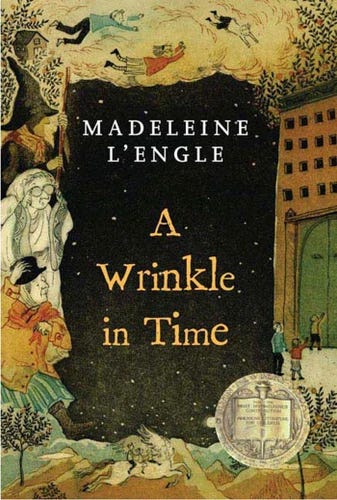
For today’s gallery, the segment where I name a work of art that stopped me in my tracks: one of my favorite novels from childhood—A Wrinkle in Time by Madeleine L’Engle
It has been many years since I’ve read it, but this week I was looking for books to read aloud to my kids and ran across the familiar cover from my elementary school days. It is a classic sci-fi fantasy that follows young Meg Murry as she travels across dimensions using tesseracts to save her missing father from a sinister cosmic power threatening the universe. It is beautifully written and such a page turner, but what made me want to tell you about it today is this fact:
When Madeleine L’Engle wrote A Wrinkle in Time, over thirty publishers turned it down. The problem wasn’t the story—it was the container. Publishers didn’t know where to put a book that blended quantum physics, Christian mysticism, grief, and an awkward teenage heroine. It was considered too dark for children, too theological for sci-fi, and too sci-fi for religious readers.
They wanted L’Engle to pick a lane. But she held her ground. She let the book be its wild, hybrid, unclassifiable self. There was no traditional container it would fit in, but that didn’t stop her.
When we try to force our work into a specific, recognizable container, we risk missing out on what the art itself actually wants to be.

Liturgy for Living
For today’s Liturgy for Living, I invite you to find a process that allows you to watch life grow.
Sourdough rising on the counter.
A seed pushing through dirt.
Wine or beer or kombucha fermenting in the dark.
Leaves slowly turning and falling. (Remember, this process means the tree is alive.)
Pick one natural process this week and sit with it. Name the container it lives in, and notice how that vessel protects and encourages the life that’s there.
Now, turn inward: Where is that same quiet, unstoppable life calling to you?
Where are you trying to put new wine into old wineskins? And what grace do you need to give yourself today—to release the container that no longer fits, and step into the one that has space for new life to grow?
Would love to hear your thoughts in the comments.
What creative containers have carried you over the years?
Are there any vessels you feel you’ve outgrown—or new jars you are feeling invited to explore?


