

Welcome to Art’s Open Door. I’m Merideth: oboist, author, creative coach, and a fellow traveler on this messy, human road. I believe the real work of art is the person you are becoming right in the middle of your chaotic life, and that beauty is an open door to divine love. Today is episode 1 (!) of the new podcast version of this here newsletter, and I’m excited you’re here. If you enjoy it, could you take a moment to heart, comment, and/or share with someone who needs this type of space? I’d appreciate it. You can listen to the pod right here on Substack on Apple Podcasts or Spotify. Thanks again for being here.
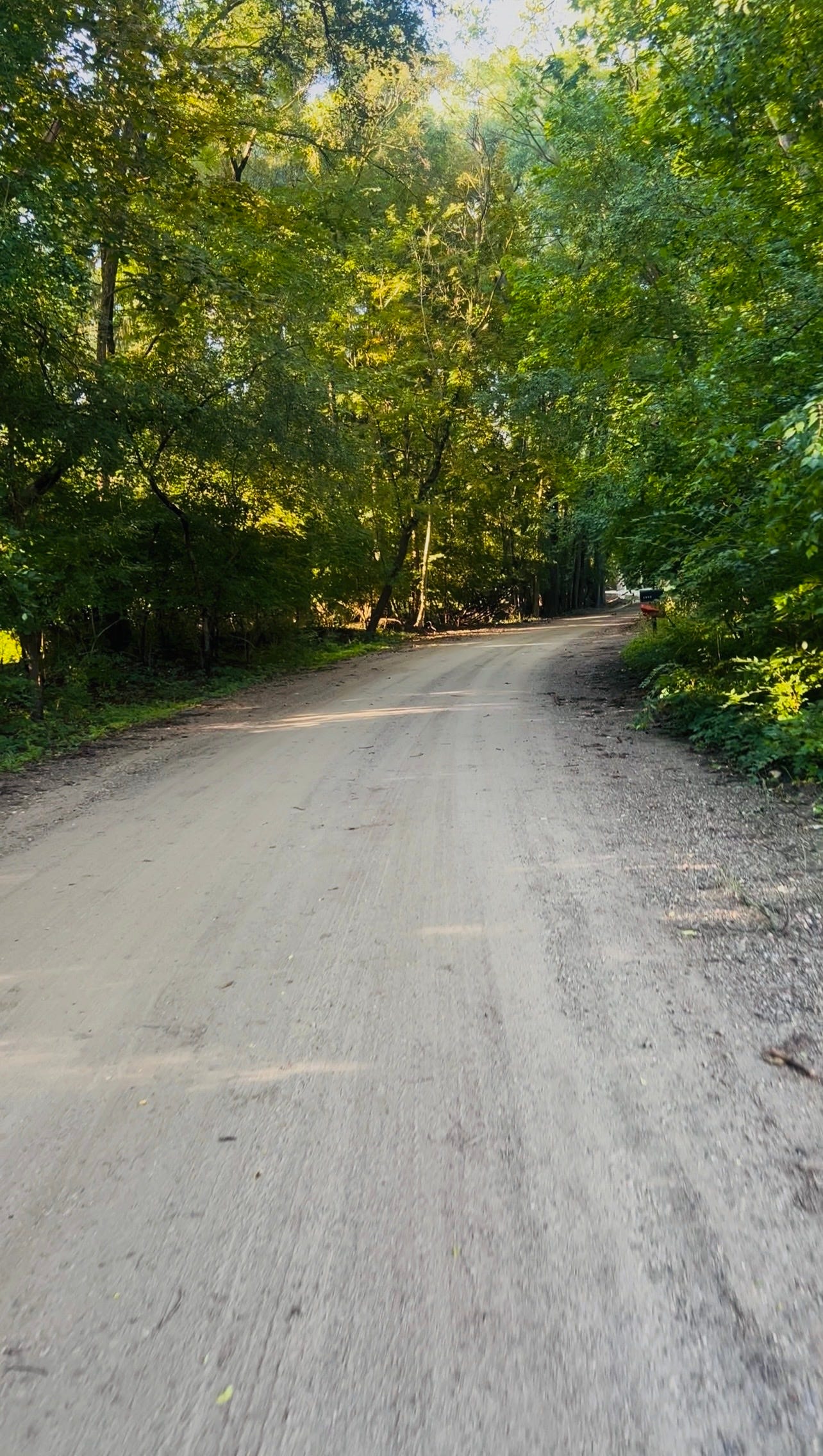
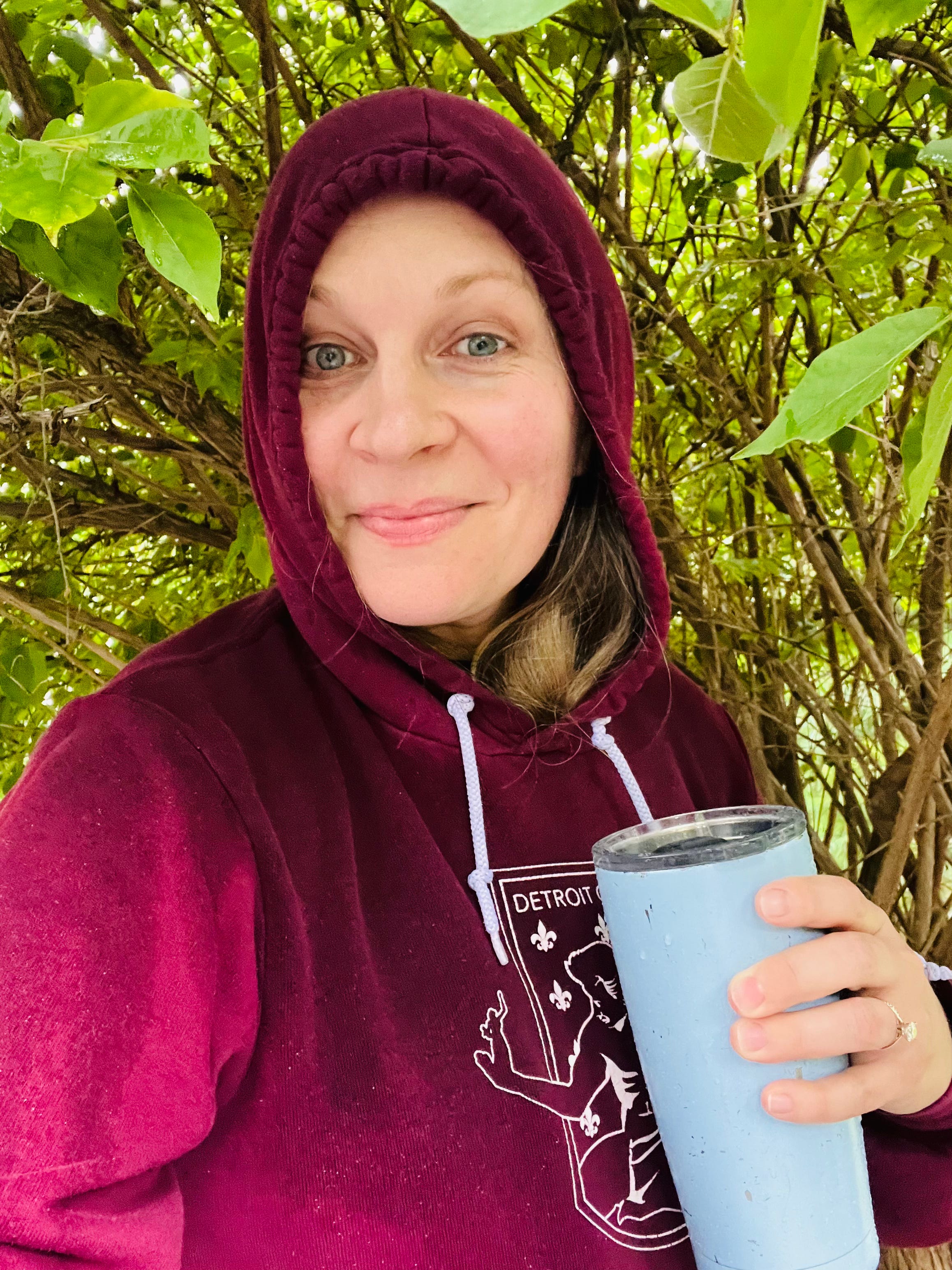
Instead of writing, I took a walk in the rain this morning. I was prepared in case the skies opened during my daily 1.8-mile loop in my neighborhood, although I hoped it would hold off for my hair’s sake. I’ve felt this pull to walk this same path every day in this season of life like I feel the urge to reach for a snack or sleep when it’s time—a deep bodily need for nourishment, instead of a daily to-do. I usually write before I walk, but today, in spite of the rain, I put on my hoodie and started out.
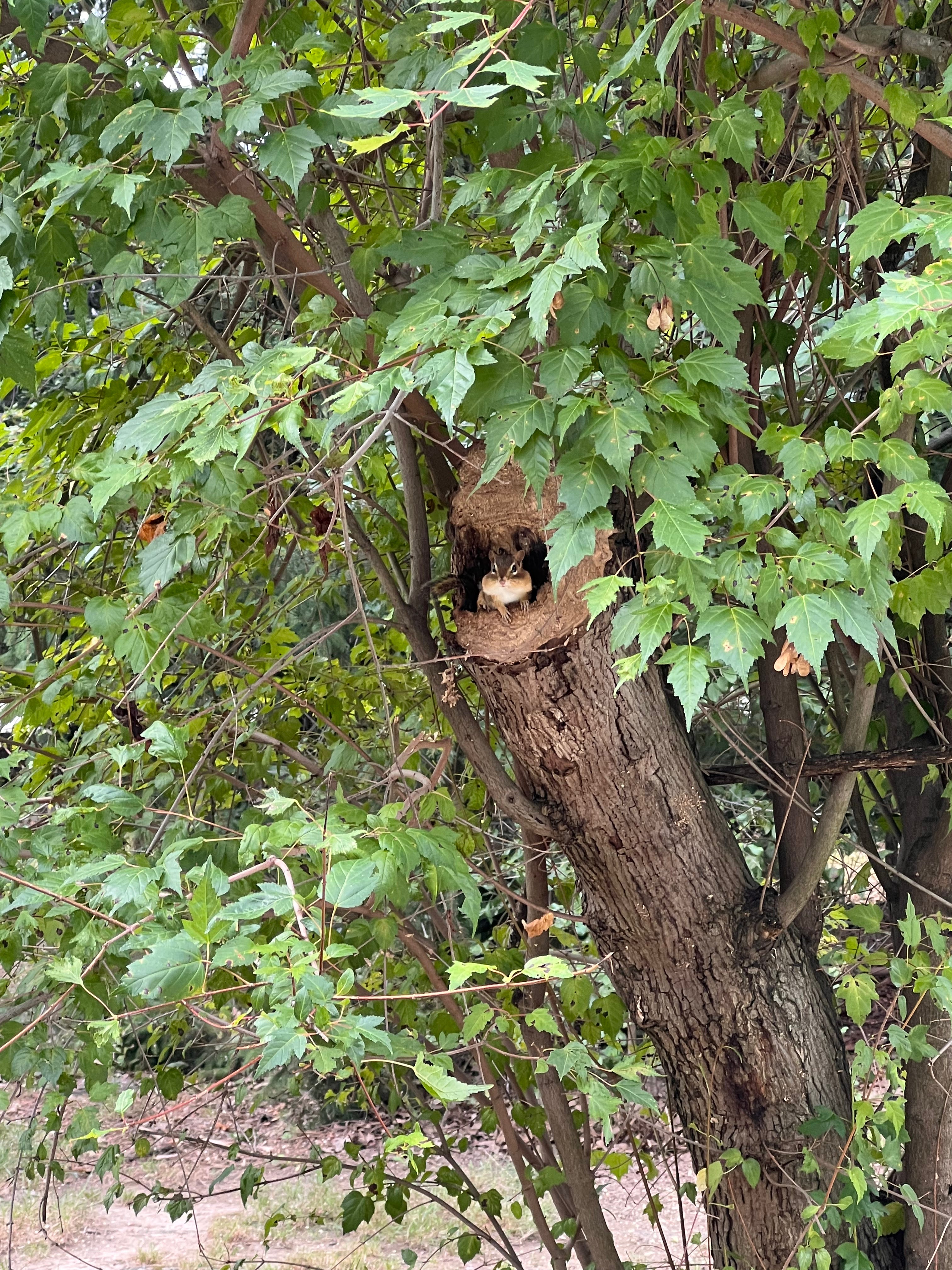
There are trees I’ve befriended on this path; inside one the other day, I saw a full-bellied chipmunk who’d taken residence in a dead trunk. There was a standoff: she waiting at the entrance and staring me down with suspicion, me trying not to move too suddenly and scare her away.
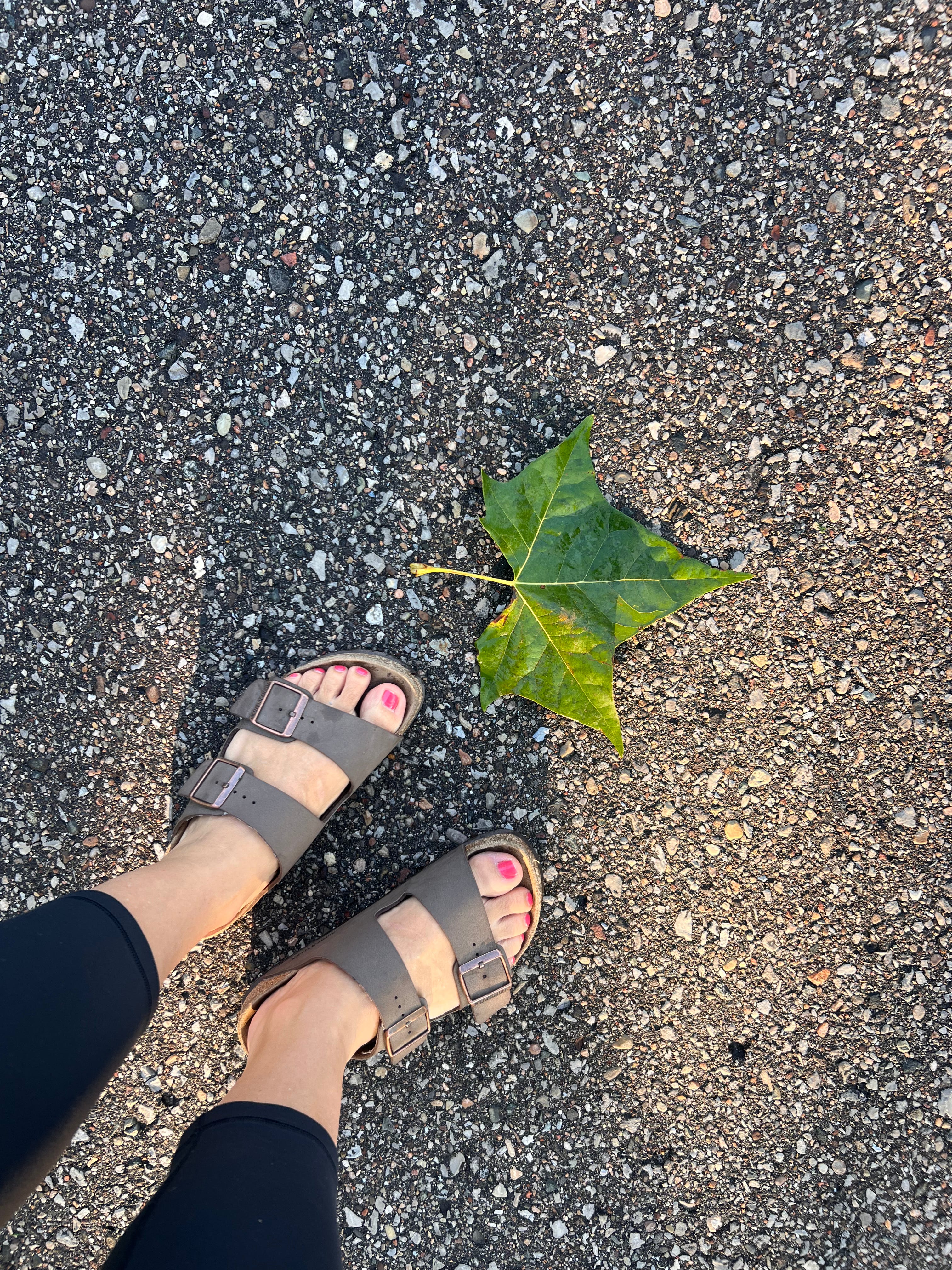
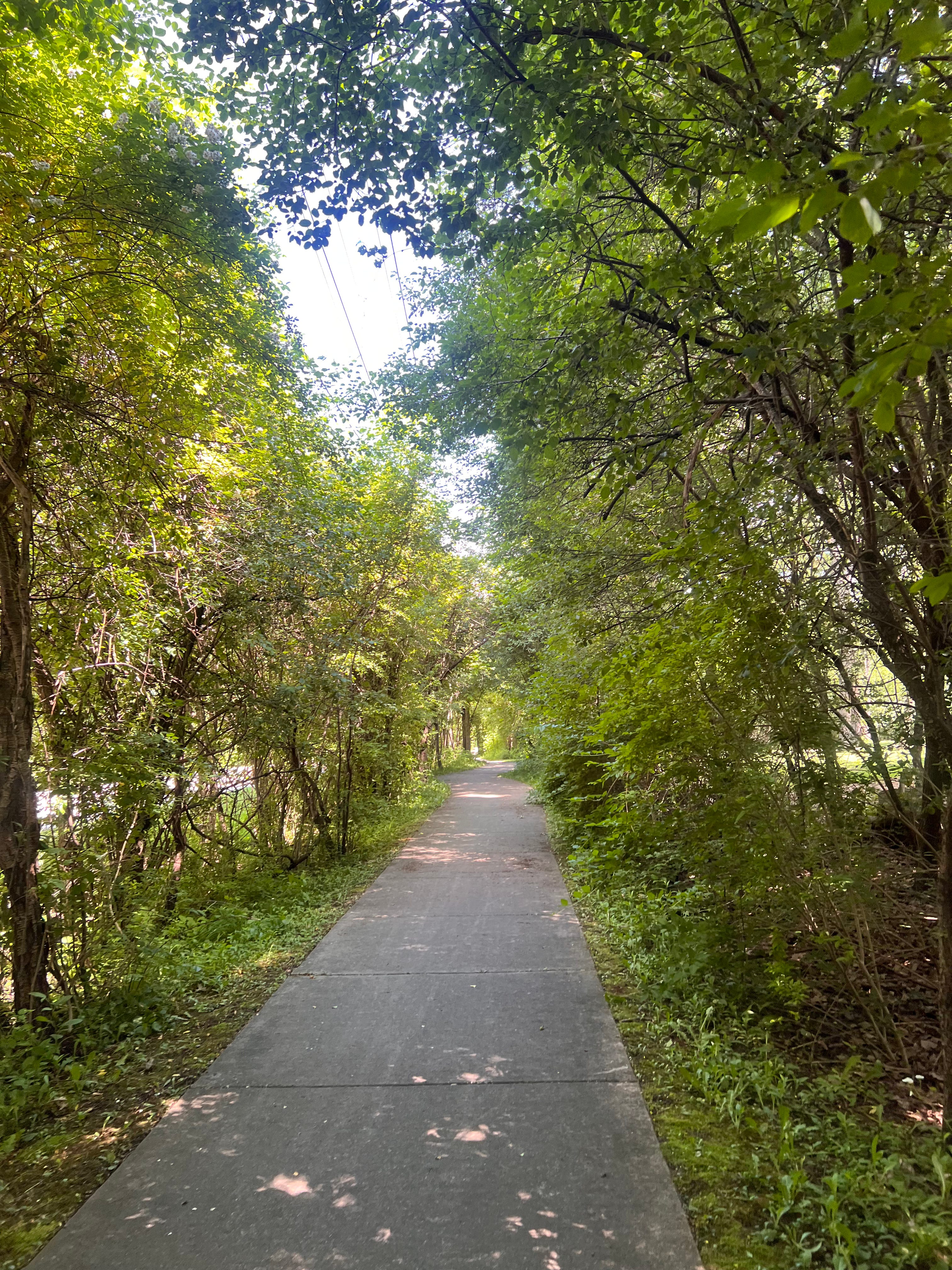
On my walk, mostly it’s suburban concrete, manicured lawns, children waiting for the bus, people walking their dogs. But there’s this one 100-yard stretch that is dirt road, almost completely covered with trees, where I rarely see anyone. It’s at the end of my loop, and so sometimes, if I don’t have a full 35 minutes to walk, I go backward and walk the dirt part twice. The young people say “touch grass” when they feel the need to ground themselves, and I don’t know; for me, it’s touching dirt. About six weeks from now, it’ll be my boots that will come home muddy, but I’m delighting in the days I have left to return to my doorstep in my trusty, dusty Birkenstocks and muddy toes.
I listen to the daily lectionary on the Pray As You Go podcast, turn on some of my favorite music when that’s over, but mostly I just let my feet and mind wander. I let whoever God would have me pray for come to mind. If you’ve ever received a text from me around 8:30 AM, you know it was you. But mostly I just marvel at the wonders of this world, let God speak in spite of all the inner noise, even in—maybe especially in—the rain.
I’ve written three other versions of this opening, by the way. Those two paragraphs arrived this morning as I sat down to finalize this essay, this post, this episode—can we call it a love letter instead? All the other words, which I had shaken up and squeezed out like one of those near-empty cans of whipped cream, they were all wrong.
Do you ever do that? You go to take a step forward and do a thing you really want to do, create something you’ve always dreamt of making, or do something you’ve prepared for, and no matter how hard you try, no matter how hard you shake and tap and jostle that can, it is empty. (My kids had pancakes with whipped cream this morning and that sad sound that the spray bottle makes when empty was visceral and mocking me, I tell ya.)
I have coaching clients who prepare for years to launch their Substack or create their business. To record their album or write their book. They have it all planned out in their heads. Many of them have completed manuscripts in their desks as I write this. The starting line appears beneath their feet, and they can’t seem to move. Maybe they are paralyzed with options, or they start second-guessing everything, but even though they are closer than ever to their dream, they can’t get past the threshold; they can’t walk through to the other side.
I realized rather poetically this morning, as I stood at my own kind of starting line, that I had written three different versions of this first episode—two of them here on my computer, one or more in my head—and that I was afraid, too. And so picture me on the dirt road, my favorite place to think, instead of in my writing chair. I went there to move myself forward, and God invited me to slow down. I turned my face up and let the drizzle baptize me.
These felt like the right words with which to begin.
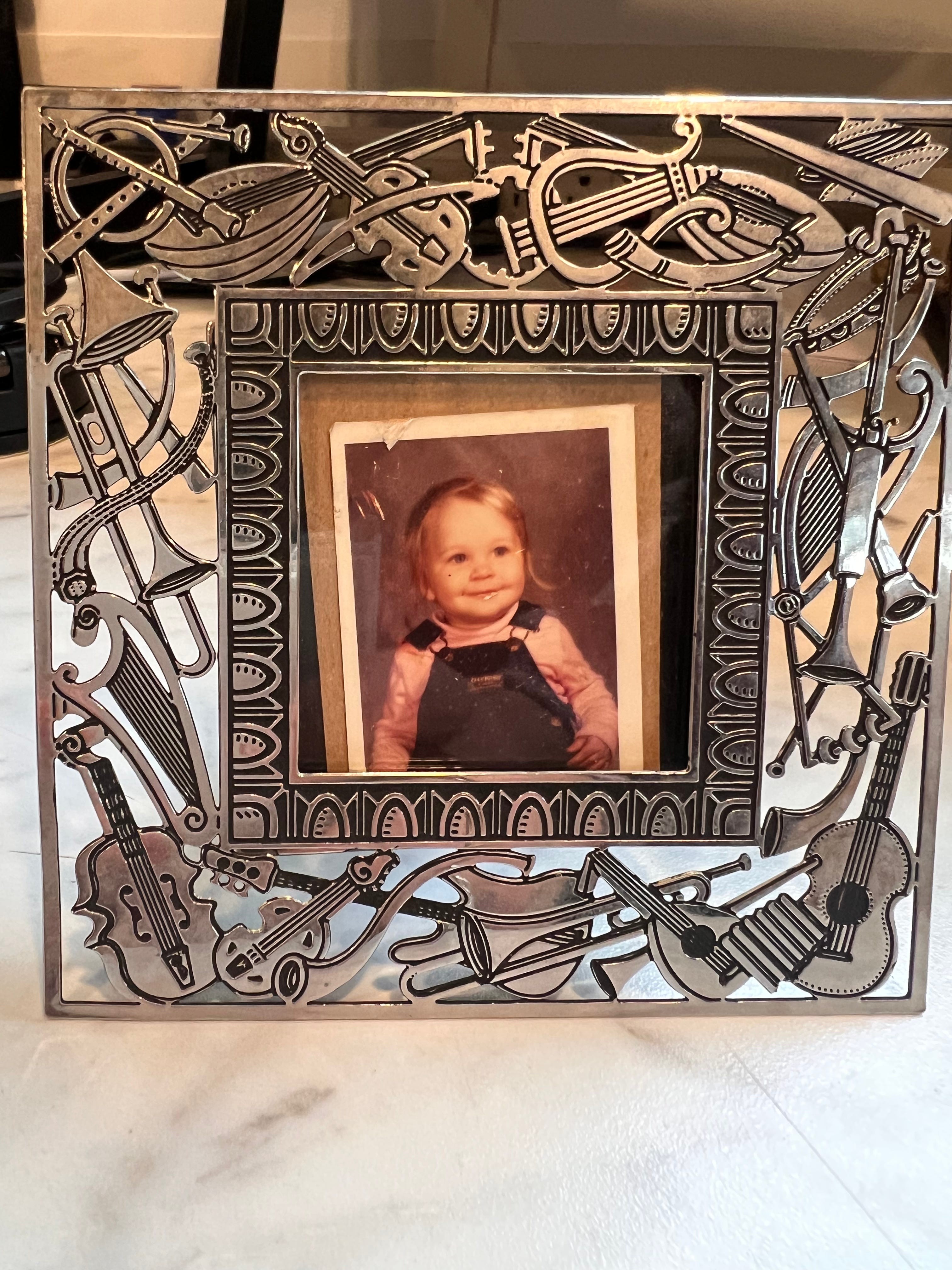
I’ve always loved words. Not just putting them in order, but everything about them—their meaning and history, even the way they look. I remember as a very young kid, looking at the word M-U-S-I-C, when I was just learning how to spell, and being grateful that music started with an “M” like my name. Like we were somehow already linked: Music and Meri. (That was my nickname as a child.) I had a lot to learn—heck, I could barely spell M-U-S-I-C, much less read notes—but it was almost like I knew this art form and I were friends already. Like a character who meets a mysterious stranger in Act I, the melodies, however simply understood at age four—Music and Meri—they were kindred.
Now, little Meri didn’t know Greek etymology, but I know now that the English word music is connected to the word muse. So even in its earliest meaning, there was this whisper of inspiration from a higher source, embedded right there in the word itself.
If you know even a little of my story, you know that, here in Act II (or is it Act III?), my relationship with music continues to evolve. But I can still say, almost 40 years from when I remember naming that Music starts with M like Meri, I still feel bound and connected to her. I’m realizing more and more that it wasn’t a friend I was meeting, but a part of myself, a part of God, a gift that God gave me, a portal through which God reached into my heart—a gift I had to choose, in each day of my life since, to accept or not.
As a coach and workshop facilitator who writes about art and music, over the years I’ve collected hundreds of stories at this point about people’s relationship to words—especially the word Art. With a capital A. It brings memories of cruel teachers, feelings of inadequacy and fear, something indefinable or untouchable and confusing, a fickle friend (or villain?) that wears a beret and a handlebar mustache. The word art comes from the Latin ars, which is connected to skilled labor. While the word "music" has its origin in its connection to the divine, art does not. There it is—the lie we tell ourselves: only those with skills can be artisans or artists. If one can’t read music, then one can’t call themself a musician.
As a member of the “elite” artist bunch, with years of training in my art form, I have been guilty of perpetuating these mindsets, out of protection or arrogance, fear of being named obsolete, a response to a declining cultural relevance—maybe, yes, probably. But believing that Art was only for the trained and skilled and “good enough” has done the little girl whose name started with M real harm. It encouraged her to believe the gift, this part of her that came from God, was not given without conditions—that there was something to strive for, to earn.
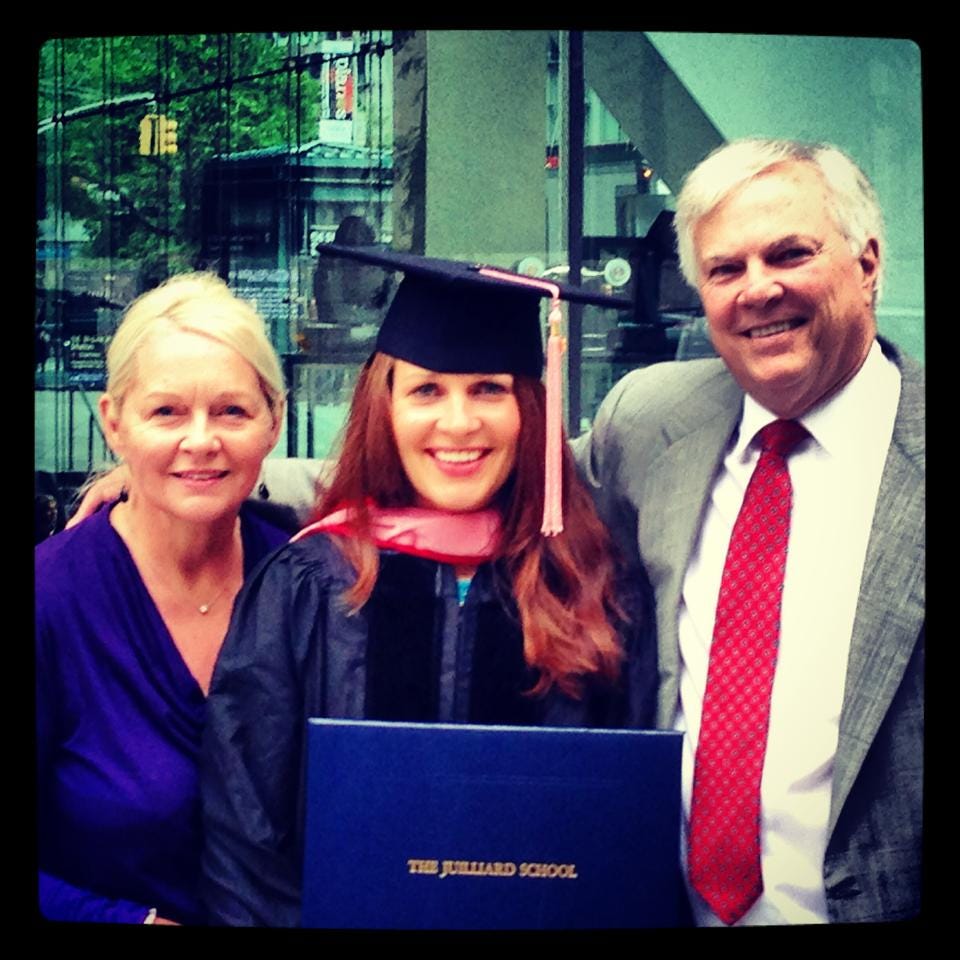
And so what better place to begin, here on episode one of the podcast, than to remind you that every day is a work of art, and Art with a capital A.R.T. is for everyone. That you are an artist. That you were created by Being itself, whose very first act was making beautiful things, ordering the chaos—with skill, to be sure, but first and foremost with a beauty that is born of Love.
These things aren’t so easy to believe, I know. And so, in my latest book, Art Is How God Loves Us, I took the liberty of redefining Art once and for all. Instead of the elite, the technical, the gatekept, it has become, in this act of my life, an acronym for something that God embedded into creation: Atoms Responding to Transcendence.
If creation is the most loving thing God does, then each act of creation since means that every living thing—and even dead things (yes, it is a miracle)—holds within them the power of new life, resurrection, transcendence. The natural and human-made parts of the world shimmer and tremble with creative potential, set in motion by an Artist God. And so being an artist means being open to naming and noticing the beauty happening right in front of you: hearing the sun, moon, and stars of the French countryside in every oboe reed; letting the Latin jazz rhythms my husband plays on the drumset in the garage take me to Brazil and Spain to hear a language of longing and loss that I can somehow understand; standing in the rain on a dirt road as the seasons change and letting it wash away the cynicism and fear at what I perceive as the starting line.
We know that it rains because clouds become heavy with condensation and the jet stream, etc., etc. But as it ran down my nose this morning, even science became A.R.T.—atoms responding to transcendence. That rain fell for me, an outpouring of Love from my Creator, an open door to deeper trust and grace upon grace.
And so, as we begin here at Art’s Open Door, as you undoubtedly stand on the threshold of some invitation from God to befriend a part of yourself you were tempted to discount for lack of skill or fear of failure... as you wait for proof of concept or the shame of your mishaps to dissipate... as you wait and wait and write and rewrite, looking for the right way to begin... as you stand at the beginning of a new idea, I hope you’ll see it not as a starting line, but a door that is already open.
I hope you’ll name every drop of rain a resurrection. That this world, each and every one of its atoms, is in the midst of responding to their Creator’s Love. And that includes you, by the way. Beauty and even dissonance are an opening, a portal to the divine—to something that includes us, but doesn’t depend on our abilities. Not on our goodness, but on God’s.
I say in the intro for the show that this is a podcast about naming and noticing beauty, but it is also about remembering how to be human, because the one leads into the other, how to let the atoms within you—the love that you were made with—respond to that original Love.
To walk through A.R.T.’s open door is to believe you are a beloved work of art yourself. It is choosing to participate in the image of an Artist God who lives within you, listening for that knocking, and stepping across the threshold, fears and all. Because being an artist—and being a human—isn’t a race to win or a skill to earn. It is a gift we accept, and a life we live into.
What if the door was already open? And what if what you’re supposed to do next will not be made clear until you step through?
The Gallery
Each week, alongside our reflection, I want to share a quote, a poem, or a piece of art that stopped me in my tracks—a little evidence of atoms responding to transcendence out in the wild.
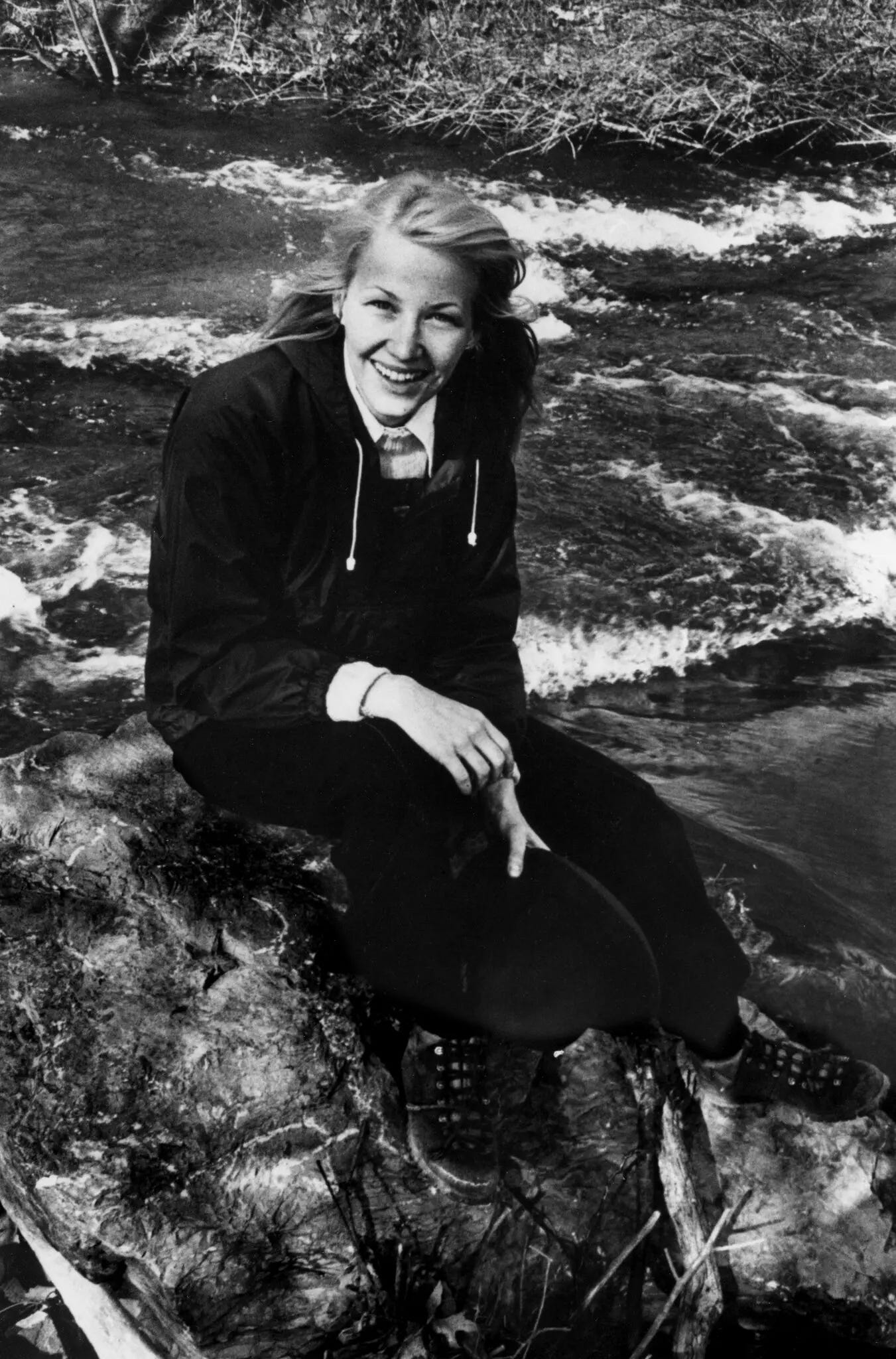
This week, as we talk about threshold paralysis and the fear of beginning, we lost one of our great patron saints of seeing. Annie Dillard passed away this week at the age of 81.
If you don’t know her work, she was a Pulitzer Prize-winning author, essayist, and naturalist who spent her life teaching us how to truly pay attention to the natural world and the spiritual magic hidden inside it. In her classic book, The Writing Life, she gave artists the ultimate permission slip against holding back.
One of the things I know about writing is this: spend it all, shoot it, play it, lose it, all, right away, every time. Do not hoard what seems good for a later place in the book or for another book; give it, give it all, give it now. The impulse to save something good for a better place later is the signal to spend it now. Something more will arise for later, something better. These things fill from behind, from beneath, like well water. Similarly, the impulse to keep to yourself what you have learned is not only shameful, it is destructive. Anything you do not give freely and abundantly becomes lost to you. You open your safe and find ashes.”
Annie Dillard, “The Writing Life”
When we are paralyzed at the starting line, the impulse is to save ourselves. We are tempted to hoard our ideas, wait for the perfect timing, keep our best energy until we feel “skilled enough” or “ready.”
But Dillard reminds us that the creative well doesn’t dry up when you use it. In fact, it’s the opposite. When you spend it all right now, on this dirt road, in this moment, before you feel ready—you can trust that more will arise. What a gift. I’m grateful for her life, her words, and this reminder that there will be enough.
Liturgies for the Living
I always want to leave you with something practical—an invitation to step into what we’ve talked about today. This final section of the show is what I am calling Liturgies for the Living.
The word liturgy comes from Ancient Greek and means “the work of the people.” And so these simple, analog practices are here to invite you to practice being human—a work of art created and sustained by God.
Wherever you are right now—whether you are walking on a wet dirt road, sitting in traffic, or standing at a starting line of your own making—I invite you to take a slow, deep breath.
Look around and notice one small thing that you might be taking for granted. For me this morning, it was a raindrop on my nose. For you, could it be the air in your lungs? The roof over your head? The color of the sky, the warmth of a mug in your hands?
Now let your mind enter into its creation. How was it made? Remember whatever science you may recall from middle school, and sit with whatever wonder or questions arise.
Let your shoulders drop. Unclench your jaw.
You do not need to earn this day. You do not have to prove your worth to the One who made you, or to anyone else for that matter. You can step forward into whatever work you are called to, knowing that God will provide everything you need.
If you’ve been waiting for a sign to begin, this is it.
The design of each raindrop or ray of sunlight is proof that atoms are already responding to the Love that spoke you into existence. Being an artist, just like being human, isn’t something we earn—it is a gift we accept.
So, receive the gift of being made. Receive the grace there is in being human.
Until next time, friends.
Go in peace.
What did you notice in this simple practice? I’d love to hear in the comments!


